AUKUS Deal Revised All Three Virginia-Class Submarines for Australia Will Be Second-Hand, Marles Confirms at Shangri-La
Threat Level Assessment
LEVEL 2 OF 5, MONITOR
Bottom Line Up Front
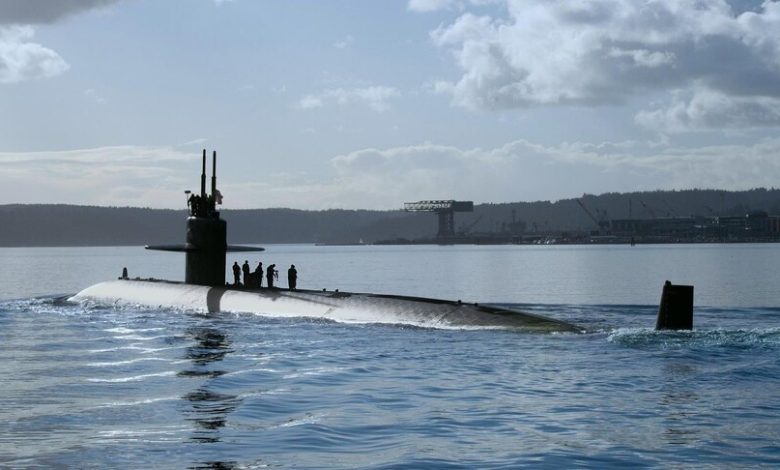
Australian Deputy Prime Minister and Defence Minister Richard Marles confirmed on 31 May at the IISS Shangri-La Dialogue in Singapore that all three Virginia-class nuclear-powered submarines Australia will receive under the AUKUS Pillar One arrangement will now be second-hand, in-service vessels rather than the previously planned mix of two used boats and one new Block VII build. The revision drops the new-build option entirely, consolidating the fleet on a single Block IV variant for supply chain and operational simplicity. Separately, US Defence Secretary Pete Hegseth and UK Defence Secretary John Healey announced the first Pillar Two signature project: a suite of advanced payloads for uncrewed undersea vehicles, with first deliveries expected in 2027. The revisions represent the most substantive restructuring of AUKUS Pillar One since the March 2023 San Diego announcement.
Key Judgments
The shift to all-second-hand submarines is driven primarily by the chronic underperformance of US shipyards rather than by Australian preference. The Congressional Research Service reported in January 2026 that actual Virginia-class production has been limited to approximately 1.1 to 1.2 boats per year since 2022 against a two-per-year target, creating a growing backlog. Delivering a new Block VII vessel on top of three used boats would have placed further strain on a construction base that already cannot meet current commitments. Marles’ framing of simplicity and cost-effectiveness is accurate but incomplete as an explanation.
The Pillar Two UUV signature project represents a deliberate acceleration to show tangible delivery against years of criticism that AUKUS was producing summits but not hardware. UK Defence Secretary Healey’s remark that the alliance “talked too much and delivered too little” is a direct acknowledgment of that criticism, and the 2027 delivery timeline for the first undersea drone payloads is the first concrete near-term output date attached to any AUKUS programme since the pact was announced in 2021.
The Shangri-La announcement, combined with Hegseth’s public statement that the US is “grateful” for Australian support in the Middle East, suggests Washington has decided to manage the AUKUS relationship as a strategic priority rather than a burden-sharing friction point. Trump’s April statement that he was “not happy with Australia” over Hormuz has been walked back at the highest level inside 30 days, which is a faster course correction than seen with European NATO allies who face similar spending-share pressure.
3
All Second-Hand, Virginia-Class
2027
First UUV Payload Delivery
$235B
Total AUKUS Cost, 30-Year Estimate
2040s
SSN-AUKUS Delivery, Unchanged
SITREP Timeline : AUKUS Pillar One, September 2021 to May 2026
🔴 The Revision
The Block VII New-Build Is Gone. All Three Virginia-Class Submarines Will Be Used.
Australian Deputy Prime Minister and Defence Minister Richard Marles confirmed on 31 May at the International Institute for Strategic Studies Shangri-La Dialogue in Singapore that the structure of Australia’s Virginia-class submarine acquisition under AUKUS Pillar One has changed. All three boats Australia will receive in the early 2030s will be in-service second-hand vessels, removing the new-build Block VII that was part of the original March 2023 San Diego agreement. The joint statement issued with US Defence Secretary Pete Hegseth and UK Defence Secretary John Healey described the revision as “streamlining” Australia’s acquisition, “simplifying supply chain management, operational and maintenance requirements, and maximising cost efficiencies.”
The practical logic is straightforward. Under the original 2023 plan, Australia was to receive two Block IV Virginia-class submarines currently in US Navy service and one brand-new Block VII vessel built to order. The new arrangement consolidates the entire initial fleet on a single Block IV variant. Marles framed this as good management: operating four classes of submarine simultaneously, which is what Australia would face with the full Collins extension, three Virginia variants, and the future SSN-AUKUS class, would have been operationally complex. The all-Block-IV pathway reduces that complexity to three classes and aligns the two interim Virginia boats before the SSN-AUKUS arrives in the 2040s.
Marles described the change as “definitely cost-effective” and said the option for three vintage submarines had “always been considered” as a possibility. That framing is accurate in the narrow sense that the 2023 agreement did include an option to purchase up to two additional in-service vessels if needed. The shift from option to baseline, however, is substantive. Australia is now locked into taking whatever the US Navy can release from its current active fleet rather than commissioning a new-build that would carry Australian specifications.
🟡 The Industrial Backdrop
US Shipyards Cannot Build Fast Enough to Meet Their Own Navy’s Demand, Let Alone Australia’s
The revised arrangement did not emerge from nowhere. The Congressional Research Service’s January 2026 update on the Virginia-class programme stated that the actual production rate has been limited to approximately 1.1 to 1.2 boats per year since 2022, against a planned procurement rate of two boats per year. That translates to a growing backlog of submarines procured but not yet built. Newport News Shipbuilding and General Dynamics Electric Boat, the two US nuclear submarine yards, are receiving billions of dollars in congressional industrial-base funding designed to push production to two and eventually 2.33 boats per year to support both the American fleet replenishment and the Australian sale. That goal remains years away from realisation.
In that context, adding a new-build Block VII for Australia represented a scheduling commitment that the US yards could not credibly guarantee. The FY2026 budget submitted by the US Navy requested procurement of just two more Virginia-class vessels, a continuation of the reduced rate. By removing the new-build from the Australian order, Washington frees its construction schedule from a delivery obligation to Canberra while still fulfilling the alliance’s core commitment through in-service transfers. The US Navy’s 24-boat Virginia fleet provides the pool from which the three Australian submarines will be drawn.
The agreement to build SSN-AUKUS submarines in Australia in the 2040s remains unchanged, all three ministers confirmed. That programme involves a British-designed next-generation submarine incorporating Australian, American, and British technology, to be built at Osborne in South Australia by BAE Systems in partnership with ASC. Australia committed A$3.9 billion as a down payment for the new submarine construction yard in South Australia, with a further A$12 billion committed to the Henderson Defence Precinct in Western Australia.
Joint Ministerial Statement : Marles, Hegseth, Healey : Shangri-La Dialogue, Singapore, 31 May 2026
“This approach would enable Australia to acquire three in-service VCS in lieu of a mixture of new and in-service VCS variants.”
🔵 Pillar Two: The Drone Programme
The First Signature Project Under the Technology Pillar Is About Underwater Drones and Subsea Cable Defence
Alongside the submarine restructuring, Hegseth and Healey announced the first signature project under AUKUS Pillar Two, the technology development pillar that covers quantum computing, undersea systems, hypersonics, artificial intelligence, and cyber capability. The project focuses on advanced payloads for uncrewed undersea vehicles. Hegseth described it as “a suite of highly adaptable multi-mission UUV payloads designed to support undersea operations and maintain our collective advantage in the maritime domain.” Healey said the systems would include sensors and weapons for undersea drones and would reach front-line forces rapidly. First deliveries are planned for 2027.
The context for the UUV programme is the accelerating threat to subsea infrastructure. Marles told the Shangri-La audience that the seabed “is becoming a battlefield” and that subsea cables have been severed at historically unprecedented rates across the Baltic and the Taiwan Strait since November 2024. He cited the fact that approximately 99 per cent of Australia’s internet traffic flows through just 15 subsea cables, making the country acutely exposed to deliberate or accidental severing of those links. The Anduril Ghost Shark programme, under a $1.7 billion Royal Australian Navy contract announced in 2025, is the platform on which a significant share of the new UUV payloads are expected to deploy.
Healey’s acknowledgment that AUKUS “talked too much and delivered too little” was candid for a ministerial joint statement. It reflects criticism that has been consistent since 2021: that the alliance has generated headlines and communiques at a rate that outpaced actual hardware in the hands of sailors. The 2027 UUV delivery date, if met, would be the first tangible near-term output of either AUKUS pillar. Virginia-class submarine transfers, even under the revised second-hand arrangement, remain scheduled for the early 2030s.
🟡 The Spending Context
Hegseth Walks Back the April Friction While Insisting Every Ally Must Spend More
The Singapore meeting carried a diplomatic subtext. Trump’s April statement that he was “not happy with Australia” over its role in the Hormuz crisis had introduced visible friction into the alliance relationship at the precise moment Australia was making its second instalment payment to the US submarine industrial base, a payment of A$800 million confirmed in July 2025. Hegseth’s statement to SBS News in Singapore that the US is “grateful” for Australian support in the Middle East, noting that “when we’ve called Australia in this context, they’ve been willing to help,” is a clear diplomatic course correction.
Hegseth’s broader speech to the Shangri-La Dialogue maintained the Trump administration’s standard line that allies must spend more. He told the audience that the era of the United States “subsidising the defence of wealthy nations is over” and that the US wanted “partners, not protectorates.” He called out New Zealand directly, saying that its ambition to reach 2 per cent of GDP on defence was “freeloading” and “not enough.” Australia, by contrast, was on the list of regional partners Hegseth praised for increasing their spending, consistent with Canberra’s April announcement of a plan to scale defence investment from A$63.4 billion in the 2026-27 budget to A$112.1 billion within a decade.
The infrastructure commitments at HMAS Stirling on Garden Island, Western Australia, remain in place. The naval base is planned to house four US-commanded Virginia-class submarines under the Submarine Rotational Force-West project from 2027, with A$8 billion committed for associated infrastructure. Those rotational vessels are separate from the three submarines Australia will eventually own; they are American boats operating from Australian facilities as an interim measure that gives the Royal Australian Navy nuclear submarine experience years before it takes title to its own boats.
🟢 What the Revision Changes and What It Does Not
Fleet Composition Revised. Timeline Unchanged. SSN-AUKUS Unaffected.
The revision changes the composition of the Pillar One submarine fleet Australia will receive in the early 2030s. It does not change the delivery timeline. It does not affect the option to purchase up to two additional Virginia-class submarines if the SSN-AUKUS programme falls behind the 2040s schedule. It does not alter the infrastructure commitments at HMAS Stirling or the Henderson Precinct. It does not change the plan to build SSN-AUKUS submarines in Australia. The sole structural change is the removal of the new-build Block VII vessel from the initial purchase, replacing it with a third Block IV in-service boat.
For the Royal Australian Navy, the practical effect is fleet homogeneity. Maintaining a single submarine variant reduces the training pipeline, the spare-parts supply chain, and the maintenance burden simultaneously. Marles was explicit about this: managing multiple Virginia variants alongside Collins and the future SSN-AUKUS class would have been “pretty complicated in terms of how you’re operating a fleet.” The all-Block-IV baseline simplifies that equation. The Australian Submarine Agency, which was established to oversee the programme, will now work toward a single interim platform type rather than managing two variants during the transition.
The cost dimension has been cited by Marles as a significant benefit, though specific savings figures were not provided in the joint statement. The original overall programme was projected by the Australian government at more than A$368 billion over 30 years, a figure cited in the 2023 announcement. A new-build Block VII submarine, procured at the current US Navy rate, carries an estimated procurement cost of approximately $5 billion per unit per the FY2026 Congressional Research Service report. Removing it from the order eliminates that procurement cost while substituting a transfer price for an in-service vessel that will be substantially lower, though the exact transfer price has not been publicly disclosed.
John Healey, UK Defence Secretary : Shangri-La Dialogue, Singapore, 31 May 2026
“For too long in AUKUS, we talked too much and delivered too little. That has now changed.”
Source Reliability Matrix
NATO grading: REL A (reliable) to F (unreliable). CRED 1 (confirmed) to 6 (cannot judge).
CRED 1
Primary source. Official joint statement from three governments. Quoted directly in multiple wire services.
CRED 1
Australian public broadcaster, correspondents present in Singapore, direct Hegseth interview, sourced Marles remarks on-record. High-reliability primary source.
CRED 2
Established wire service. CRED 2 rather than 1 due to lighter sourcing than SBS; confirmed by ABC and other Australian outlets.
CRED 1
Official US government research product. Used for production rate and cost figures. Authoritative for submarine industrial base analysis.
CRED 2
Corroborating outlets. Cross-confirmed the joint statement, Marles remarks, and Healey quote. Used for triangulation.
OSINT HQ Assessment
The revision to all-second-hand submarines is a direct consequence of US shipyard underperformance dressed in the language of supply-chain simplicity. AUKUS remains structurally intact, but Australia will enter the nuclear submarine era with used boats rather than the tailored new-build it was originally promised.
✓ What We Know
All three Virginia-class submarines Australia will receive under AUKUS Pillar One will be in-service Block IV vessels. The new-build Block VII has been removed from the order. The SSN-AUKUS class to be built in Australia in the 2040s is unaffected. The first Pillar Two signature project delivers UUV payloads from 2027. Hegseth confirmed US gratitude for Australian Middle East support, walking back April friction. Australia has committed well over A$20 billion in down payments, infrastructure, and industrial base contributions since 2023.
? What We Do Not Know
The exact transfer price the US will charge Australia for in-service Block IV submarines. The precise delivery schedule within the “early 2030s” window and whether current US shipyard production rates will allow the rotational force at HMAS Stirling to begin on schedule in 2027. Whether US production will recover enough to also replace the three transferred vessels in the American fleet without degrading US Navy readiness. The full cost saving against the original estimate from removing the new-build.
☉ What To Watch
Whether the 2027 UUV payload delivery date holds, which would be the first concrete Pillar Two output. Whether the Virginia-class production rate at Newport News and Electric Boat climbs toward 2.0 boats per year or remains stalled near 1.1 to 1.2. Whether Australia’s 3 per cent of GDP defence spending trajectory is judged sufficient by Washington as the Indo-Pacific burden-sharing pressure continues. Whether any further modifications to the Pillar One acquisition are required if delivery dates slip past the Collins-class extension window.
Sources
- Australia will purchase 3 second-hand nuclear-powered submarines under revised AUKUS deal, Anadolu Agency, 31 May 2026
- Drones and second-hand submarines: US grateful for Australia as latest AUKUS details unveiled, SBS News, 31 May 2026
- Australia to receive used submarines from US in streamlined Aukus deal, Free Malaysia Today (Reuters wire), 31 May 2026
- AUKUS to develop underwater drones, The New Daily, 31 May 2026
- US Launches New Underwater Drone Scheme With UK, Australia To Counter China, Newsweek, 31 May 2026
- Report to Congress on the Virginia-class Submarine Program and AUKUS Pillar I, USNI News, January 2026 (citing CRS report of 26 January 2026)
- New Aukus drone tech to protect critical undersea cables as Marles warns seabed is a battlefield, Chin@Strategy (sourced from The Guardian), 30 May 2026
Editorial Verification
The submarine revision to all-second-hand Block IV vessels is verified across five independent outlets (Anadolu Agency, SBS News, Reuters via Free Malaysia Today, The New Daily, Newsweek) plus the joint ministerial statement. The Healey quote (“talked too much and delivered too little”) is confirmed across SBS News, The New Daily, and Chin@Strategy. The Hegseth “grateful” quote is confirmed across SBS News and Newsweek. The 2027 UUV delivery date is confirmed in The New Daily citing the joint statement. All production rate and cost figures are sourced to the Congressional Research Service Virginia-Class Submarine Program report of 26 January 2026, a public US government document. The Anduril Ghost Shark $1.7 billion contract detail is sourced to SBS News. No single-source items in this report.
Coordinates and map (v8): This is a policy and procurement article. No geographic strike data applies. No map has been produced. No MGRS coordinates are required or included. Named facilities (HMAS Stirling, Garden Island WA; Henderson Defence Precinct WA; Osborne shipyard, South Australia) are cited by their official government designations and sourced to Australian Ministry of Defence and SBS News reporting. No coordinates are derived or plotted.
All claims independently attributed and verified to open sources where possible.
Approved for Publication
Marcus V. Thorne
Lead Editor, OSINT HQ
©osinthq.org 2026
This article is for news and analysis purposes only. Based on publicly available news sources and military updates. All rights reserved. Not for commercial reuse without permission.