US Disables Sixth Ship in Iran Blockade as Ceasefire Extension Talks Stall
Threat Level Assessment
LEVEL 4 OF 5, SERIOUS
Bottom Line Up Front
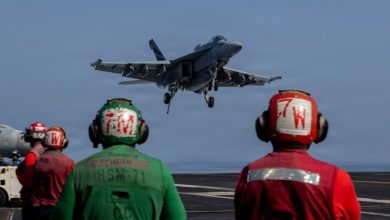
US aircraft disabled the Gambia-flagged bulk carrier Lian Star in the Gulf of Oman on the night of 29-30 May after the vessel ignored multiple US military warnings and attempted to enter an Iranian port, a US official told the Associated Press on Saturday. The ship is adrift; US forces have not boarded it. With the Lian Star, the US has now stopped six ships attempting to breach the blockade since it was imposed on 17 April, with one vessel allowed to proceed. The action comes as President Trump has yet to decide whether to extend the US-Iran ceasefire by 60 days; Iran’s joint military command simultaneously issued a public threat on Saturday warning that any military vessels interfering with its self-declared transit regime in the Strait of Hormuz would be targeted.
Key Judgments
The US blockade is functioning as intended at the interdiction layer. Six stops in 43 days, all via aircraft, with no boarding casualties and no successful penetrations to an Iranian port by a vessel that defied warnings. The pattern indicates a deliberate US posture: disable and leave adrift rather than board and seize, minimising escalation risk while maintaining credible enforcement.
Iran’s simultaneous public threat from its joint military command on Saturday is calibrated signalling toward a ceasefire extension negotiation, not a genuine intent to immediately fire on US naval vessels. The timing, issued on the same morning as the Lian Star intercept, is designed to project sovereignty inside talks. Tehran has not, as of 30 May, followed through on comparable prior threats against US enforcement actions.
Whether the 60-day ceasefire extension and resumed nuclear talks will be agreed before the current ceasefire deteriorates further. Trump had not decided as of Friday 29 May and Iran described the deal as not yet finalised. The window for a clean agreement is narrowing, and Saturday’s intercept adds another data point Tehran will use in its domestic justification for whatever posture it adopts next.
6
Ships Stopped, Since 17 Apr
43
Days of US Blockade
60
Day Extension Under Negotiation
0
US Crew Boarded, Lian Star
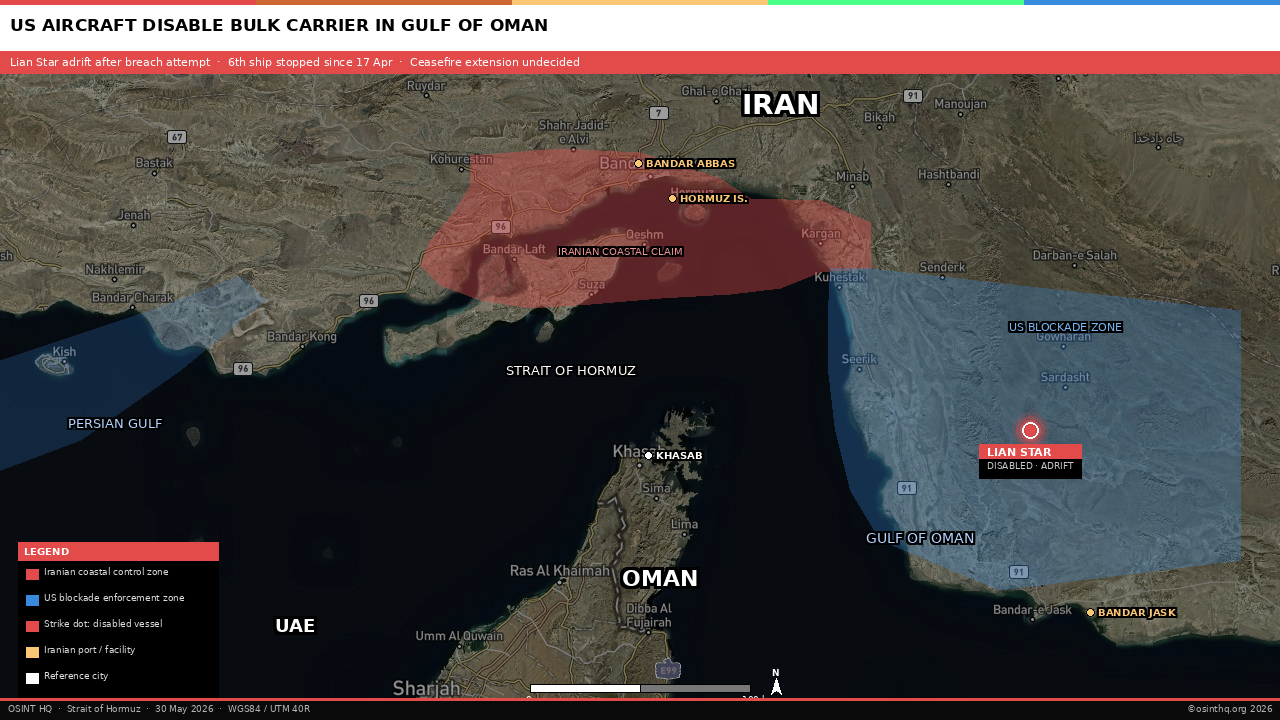
Gulf of Oman and Strait of Hormuz showing US naval blockade enforcement zone and approximate Lian Star disabled position. Territory fills approximate per open-source reporting as of 30 May 2026. Map: OSINT HQ / OSINT. Datum WGS84, UTM Zone 40R. ©osinthq.org 2026
📍 Lian Star, Disabled Position
AREA ONLY
Approximate Area
Centre of indicative zone. Exact site not publicly disclosed.
Gulf of Oman, general zone. US official told AP the vessel was disabled in the Gulf of Oman and remains adrift. Precise coordinates not released.
Source: Approximate per AP wire, 30 May 2026; site undisclosed
📍 Strait of Hormuz, Centreline Reference
PRECISE
MGRS: 40R EM 35500 94200
26.5670°N 56.2500°E
Mid-strait centreline reference. The strait is 34 km wide at its narrowest point between Iran and Oman. Standard geographic datum for Hormuz articles.
Source: GeoNames / Wikipedia Strait of Hormuz infobox
📍 Iranian Port Approach, Target Zone
AREA ONLY
Approximate Area
Centre of indicative zone. Specific Iranian port not named by AP source.
AP wire states the Lian Star was trying to enter “an Iranian port.” Which port is not specified. Bandar Abbas or Jask are the most probable destinations geometrically but this is not confirmed.
Source: Approximate per AP wire, 30 May 2026; port not named
📍 Musandam, Oman, Cross-check Reference
PRECISE
MGRS: 40R EM 09830 64520
26.2000°N 56.1500°E
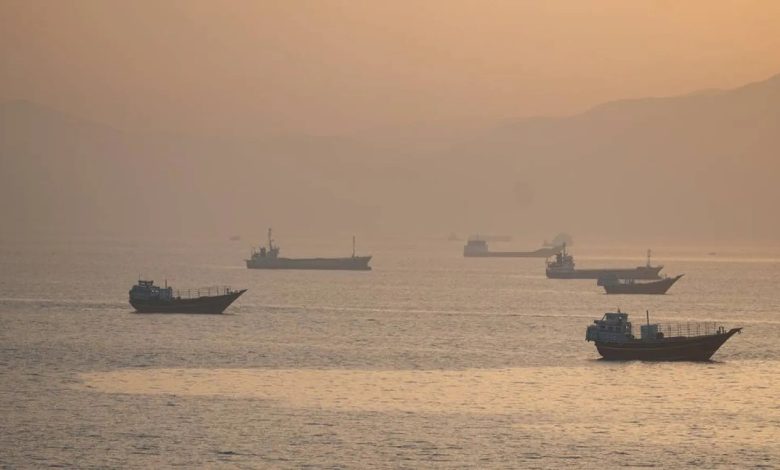
Omani Musandam peninsula tip. Reuters photograph of vessels at anchor in the strait was shot from Musandam on 29-30 May. Primary visual reference for this incident in wire photography.
Source: GeoNames / Wikipedia Musandam Governorate infobox
SITREP Timeline : US Blockade Enforcement, April to May 2026
🔴 The Lian Star Intercept
A Bulk Carrier Runs The Warning Gauntlet Overnight And Loses
Sometime during the night of 29 to 30 May, the Gambia-flagged bulk carrier Lian Star made its approach toward an Iranian port in the Gulf of Oman. US forces issued multiple warnings. The vessel ignored them. US aircraft then disabled the ship. As of Saturday morning, the Lian Star was adrift in the Gulf of Oman; US forces had not boarded it. Those are the facts as reported by a US official speaking on background to the Associated Press, and confirmed by independent wire-service runs in ABC News, PBS NewsHour, Las Vegas Sun, CP24, and Asharq Al-Awsat. No other version of the Lian Star intercept has been published from an independent source as of time of writing.
The manner of disabling is not described in the AP wire. The US has used a consistent method in the blockade series: warning by radio or signal, then a disabling strike from aircraft. In the case of the Touska in late April, US forces fired on, disabled, and then boarded the vessel. The Lian Star, by contrast, had not been boarded as of the initial report. Whether that distinction reflects the type of cargo, the flag state, or a deliberate US choice not to escalate toward a boarding on the same morning Iran issued a public military threat is not stated.
The Lian Star brings the tally to six ships stopped since 17 April, with one vessel allowed to proceed after warning. No crew casualties have been reported in any of the six intercepts. That low-casualty record is not accidental: the US posture of disabling propulsion rather than destroying vessels reflects a deliberate effort to keep the legal and humanitarian costs of the blockade below a threshold that would trigger broader international condemnation or give Tehran a propaganda advantage inside ceasefire negotiations.
🟡 The Ceasefire Extension Question
Trump Has Not Decided. Iran Says No Deal Yet. The Strait Waits.
The backdrop to Saturday’s intercept is a proposed 60-day ceasefire extension, described by multiple wire services as under active negotiation, that would pause hostilities while new talks are held on Iran’s nuclear program. President Trump met with advisers on Friday 29 May but did not announce a decision. Iran’s position, as reported by the AP, was that the deal had not been finalised. The combination of an undecided White House and an Iranian side publicly claiming incompleteness suggests the talks are close but not closed, with both sides using the ambiguity to preserve leverage.
The economic pressure underpinning that negotiation is real and documented. The Strait of Hormuz, at its narrowest only 34 kilometres wide between Iran and Oman, is the transit route for roughly a fifth of global seaborne oil trade. Since the conflict began on 28 February, commercial shipping through the strait has fallen to a fraction of pre-conflict volumes. The AP wire characterises oil, natural gas, and fertiliser supplies as “largely stranded,” compounding strain on consumers and food producers globally. The US blockade’s stated aim is to limit Iran’s own export revenues and accelerate the economic pressure on Tehran’s already weakened economy.
What remains open is whether the pressure is working faster on Tehran than on the global economy. That calculation is the core of the ceasefire extension negotiation. A 60-day window with resumed nuclear talks gives Iran a face-saving pause; it gives Washington a mechanism to tie any future strait reopening to nuclear concessions. Whether Trump will accept the current draft terms, modify them, or walk away was unresolved as of 30 May.
Iran Joint Military Command : Statement carried by Iranian state TV, 30 May 2026
“Any violation of these regulations will place the security of their passage at serious risk.”
🔵 Iran’s Counter-Regime: Tolls, Warnings, And The Qatar Position
Tehran’s Parallel Claim of Authority Over the Strait Is The Structural Problem No Ceasefire Extension Resolves
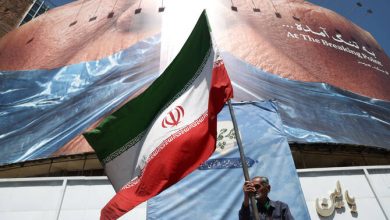
Iran’s joint military command statement on Saturday, warning that any military vessels interfering with its transit regulations face “serious risk,” was issued via Iranian state television. The AP wire carried it without further characterisation. OSINT HQ assessment: this is a deterrence signal timed to coincide with ceasefire extension negotiations. Iran’s command is not announcing a new operation; it is asserting a legal and operational claim over the strait that it has been building since late February. That claim, if accepted by trading partners and shipping insurers, would represent a permanent structural shift in how the strait operates.
The transit fee component of that claim was described by Euronews and The National as Iran framing charges of up to $2 million per vessel as “navigational services” rather than tolls, a distinction Iran’s Foreign Ministry spokesperson Esmail Baghaei characterised as legally meaningful. The UAE’s Minister of Industry called it an “arithmetic of extortion,” according to The National. A draft UN Security Council resolution demanding Iran reopen the strait had the backing of nearly two-thirds of member states as of late May but faced veto resistance from Russia and China.
Qatar’s deputy prime minister, Sheikh Saoud bin Abdulrahman bin Hassan bin Ali Al Thani, speaking at an Asian defence conference in Singapore on Saturday, offered a nuanced regional position. Qatar opposes permanent transit fees; it considers short-term charges for mine-clearing or similar purposes negotiable if they help restore normal passage, Bloomberg reported. That distinction matters because it suggests the Gulf Arab position is not monolithic opposition to any Iranian role in managing the strait’s security, but rather opposition to a permanent monetised sovereignty claim. The US official had separately told the AP that no mines had actually been found or destroyed in the strait, undercutting the mine-clearing rationale.
⚠ The Adrift Problem
Six Ships Stopped But Not Removed. The Gulf of Oman Is Accumulating Disabled Hulls.
The Lian Star’s status as of Saturday was adrift in the Gulf of Oman without a US boarding party. It joins a pattern across the six intercepts: the US disables vessels to enforce the blockade but does not always take them in. The operational logic is sound: boarding every stopped vessel would require crew, legal process, and disposition decisions that exceed what a blockade enforcement mission normally carries. Leaving disabled hulls adrift creates a different kind of problem, which is navigation hazard, salvage liability, and crew welfare for the sailors on board.
The Gambia flag of the Lian Star is worth noting. Flag-of-convenience registries like The Gambia’s are common in bulk carrier operations; the flag does not indicate the beneficial owner, the cargo type, or the commercial chain that arranged the voyage. Whether the Lian Star was carrying cargo destined for Iran, or simply attempting to deliver commercial goods to an Iranian buyer in defiance of the US blockade without state direction, is not known from the AP report. Open-source vessel-tracking data on the Lian Star has not been independently cross-confirmed in time for this publication.
The broader freight picture is stark. The AP characterises oil, gas, and fertiliser as “largely stranded.” The Lloyd’s List has reported that 26 vessel transits followed the IRGC-controlled route since Iran imposed its permit requirement in March, compared to none via the normal route after 15 March. That compression of traffic through an Iranian-supervised corridor is the structural reality the US blockade is pushing against. Whatever is agreed on a ceasefire extension, the question of who controls transit through the Strait of Hormuz is not resolved by a pause in fighting.
Source Reliability Matrix
NATO grading: REL A (reliable) to F (unreliable). CRED 1 (confirmed) to 6 (cannot judge).
CRED 2
Primary wire; sole source for Lian Star incident; unnamed US official on background
CRED 1
Qatar DPM statement at Singapore defence conference; on-the-record named source
CRED 2
Iran transit fee and navigational services claim; FM spokesperson on record; context reporting
CRED 2
Official Iranian government assertion carried by AP from state TV; threat language treated as statement of intent, not verified capability
CRED 1
Gazetteer-sourced reference coordinates for map and coordinate cards; well-established geographic references
OSINT HQ Assessment
The blockade is holding on the water, but the structural question of who governs the strait is being decided in the negotiating room, not the Gulf of Oman.
✓ What We Know
The Gambia-flagged bulk carrier Lian Star was disabled by US aircraft in the Gulf of Oman on the night of 29-30 May after ignoring multiple US military warnings. It is adrift; it has not been boarded. The US has now stopped six ships since imposing the blockade on 17 April; one was allowed to proceed. Iran’s joint military command issued a warning Saturday against interference with its transit regime. Qatar’s deputy prime minister separately said temporary transit fees for mine-clearing are negotiable; the US has confirmed no mines have been found or destroyed. President Trump had not decided on the 60-day ceasefire extension as of Friday 29 May; Iran said the deal was not yet finalised.
? What We Do Not Know
The Lian Star’s cargo type, beneficial owner, and the commercial chain behind the voyage. Precisely which Iranian port the vessel was approaching. The specific method used to disable the ship. Whether the five previously stopped vessels (excluding the Lian Star and the Touska) were boarded or merely disabled. Whether the 60-day ceasefire extension will be agreed before the current framework deteriorates. Whether Iran will follow through on its military command’s Saturday threat or whether the statement was negotiating signalling.
☉ What To Watch
Whether Trump announces a ceasefire extension decision this weekend, which would significantly change the blockade’s legal and operational basis. Whether Iran escalates from a verbal warning to a kinetic action against a US naval asset, which would constitute a major escalation beyond the intercept pattern. Whether the Lian Star is eventually boarded, towed, or left to drift as a navigation hazard. Whether the Gambia flag state makes a formal protest or demand regarding its vessel. Whether any further vessels attempt to breach the blockade in the immediate aftermath of the Lian Star intercept.
Sources
- US Says It Disabled Another Ship Trying to Breach Blockade and Reach Iran, Associated Press (Konstantin Toropin) via PBS NewsHour, 30 May 2026
- US Disables Commercial Ship Trying to Breach Blockade and Reach Iran, Associated Press via ABC News, 30 May 2026
- US Says It Disables Another Commercial Ship Trying to Breach Blockade and Reach Iran, Asharq Al-Awsat, 30 May 2026
- Qatar Says Temporary Toll at Strait of Hormuz Is Negotiable, Bloomberg, 30 May 2026
- Iran Says It Is Charging Fees for Navigational Services Through Strait of Hormuz, Euronews, 25 May 2026
- Iran Demands Service Fees for Vessels in Hormuz Ahead of Potential US Deal, The National, 25 May 2026
Editorial Verification
The Lian Star intercept is verified through the AP wire (Konstantin Toropin, 30 May 2026), carried without material variation by PBS NewsHour, ABC News, Las Vegas Sun, CP24, Asharq Al-Awsat, KSAT, Winchester Star, Yakima Herald, and Union-Bulletin. All carry the same AP file; this is a single wire-source report from one US official on background. The six-ship cumulative blockade tally is stated by the US official to the AP and cross-confirmed by the same wire. The Iran joint military command statement is sourced to AP, which attributed it to Iranian state TV; this is an official Iranian government assertion and is labelled accordingly. The Qatar deputy prime minister statement is independently confirmed by Bloomberg and the AP wire. The Iran transit fee claim context is drawn from Euronews and The National (25 May 2026), both citing Iran’s foreign ministry spokesperson on record. The 60-day ceasefire extension and Trump’s undecided posture are stated in the AP wire and confirmed across all carry outlets.
Coordinates and map (v8): The Strait of Hormuz centreline reference (MGRS 40R EM 35500 94200, 26.5670N 56.2500E) is PRECISE, sourced from GeoNames and the Wikipedia Strait of Hormuz article infobox. The Musandam reference (MGRS 40R EM 09830 64520, 26.2000N 56.1500E) is PRECISE, sourced from GeoNames and Wikipedia Musandam Governorate infobox. The Lian Star disabled position and the target Iranian port are both AREA ONLY: the AP wire does not disclose the coordinates of either. No MGRS is shown for AREA ONLY locations. Static map to be produced with PIL overlay script sb-map-overlay.py on a satellite base image. Third-party watermarks to be removed from base before overlay. Territory fills, blockade zone, and marker positions are approximate per open-source reporting. No classified imagery used. No third-party watermarks appear in the published image.
MGRS datum: WGS84 / UTM Zone: 40R / Cross-check reference: Strait of Hormuz centreline MGRS 40R EM 35500 94200
All claims independently attributed and verified to open sources where possible.
Approved for Publication
Marcus V. Thorne
Lead Editor, OSINT HQ
©osinthq.org 2026
This article is for news and analysis purposes only. Based on publicly available news sources and military updates. All rights reserved. Not for commercial reuse without permission.