Rubio Hopeful Israel-Lebanon Talks Will Produce Action Plan as Paramedics Killed
Threat Level Assessment
LEVEL 4 OF 5, SERIOUS
Bottom Line Up Front
US Secretary of State Marco Rubio told the House Foreign Affairs Committee on 3 June that he hoped the fourth round of Israel-Lebanon talks at the State Department would produce a joint statement and an action plan for security in Lebanon independent from Hezbollah, as the second day of direct negotiations was under way. Israel and Hezbollah continued to trade fire despite a de-escalation announcement by President Donald Trump on 2 June, and Israeli strikes in southern Lebanon killed two paramedics on 3 June, bringing the total of emergency and health workers killed since March to at least 130. The Lebanese health ministry recorded 3,468 dead and 10,577 injured from Israeli strikes since the war began on 2 March.
Key Judgments
The fourth round of talks will not produce a ceasefire. Hezbollah is absent from the table and has publicly rejected negotiations as capitulation. Israel is simultaneously striking southern Lebanon, including targeting emergency responders. The conditions that would underpin any binding security arrangement, a halt to hostilities and Hezbollah disarmament, are not present on the ground as of 3 June.
Rubio’s framing that Hezbollah is the sole impediment and that there is no Hezbollah without Iran is a deliberate signal that Washington is linking any Lebanon settlement to the wider US-Iran nuclear track. His observation that Iran wants to “mix it all together” while the US wants the Lebanon file treated separately reflects a negotiating posture, not a factual description of how the two files can be separated in practice.
Whether a joint statement will emerge from the 3 June session. Lebanese government sources described 2 June as a preparatory meeting with the more substantive session on Wednesday. Israeli officials have pointed to Hezbollah’s continued fire as a reason not to concede ground on troop withdrawal timelines. The gap between the two delegations’ opening positions on withdrawal, the Lebanese army’s deployment south, and the mechanism for Hezbollah disarmament remains large.
3,468
Killed in Lebanon, Mar to 2 Jun
4
Rounds of Talks, Washington
130+
Health Workers Killed, Since Mar
1.2M+
Displaced Inside Lebanon
SITREP Timeline : Israel-Lebanon War and Diplomatic Track, March to June 2026
🔴 The Rubio Statement
Hoping for a Joint Statement While Strikes Continue in the South
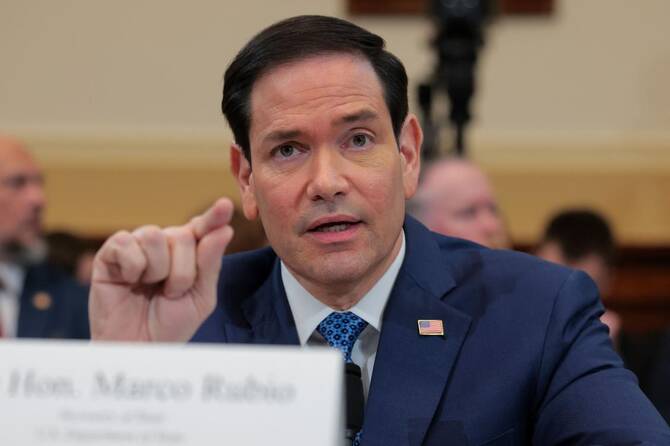
Speaking to the House Foreign Affairs Committee on 3 June, Secretary of State Marco Rubio described both delegations as seated at the State Department for a second consecutive day “for the first time in many, many years,” and said he hoped the session would produce a joint statement and an action plan covering security in Lebanon independent from Hezbollah. The statement was notable as much for its framing as its substance. Rubio was not announcing a deal. He was announcing hope, from a congressional chamber, while the talks were still in progress.
The talks are the first sustained direct negotiations between Israeli and Lebanese government representatives in more than 30 years, a diplomatic reality that Rubio has cited repeatedly in previous hearings as evidence of progress. The current round, the fourth, opened on 2 June with what Lebanese sources described as a preparatory session focused on process. Wednesday’s session was expected to tackle the substantive issues: a timeline for Israeli troop withdrawal from Lebanese territory, the deployment of the Lebanese Armed Forces in the south, and the mechanism by which Hezbollah would be disarmed or neutralised as a military actor.
None of those questions has an easy answer. Israel has captured Beaufort Castle in southern Lebanon, extended its ground presence deeper than at any point since 2000, and showed no sign on 3 June of halting air operations while talks proceeded. The Lebanese army does not have the political clearance, the equipment, or the manpower to disarm Hezbollah even if a deal were signed. And Hezbollah, which controls the actual weapons at the centre of the dispute, is not represented in the room.
🟡 Hezbollah As The Variable
“There Is No Hezbollah Without Iran”: Rubio Ties the Lebanon File to Tehran
Testifying before the Senate Foreign Relations Committee on 2 June, Rubio made the analytical connection explicit: Israel has no territorial claims in Lebanon, he said, and therefore Hezbollah is the impediment, and there is no Hezbollah without Iran. The formulation is clean diplomatically and accurate strategically. It also carries an implication the administration has been reluctant to state too plainly: that the Lebanon file cannot be resolved without Iranian agreement, which makes the Lebanon file a function of the US-Iran nuclear track.
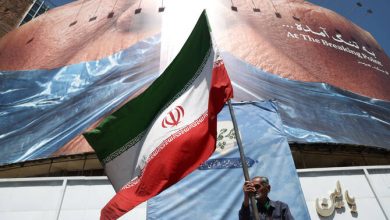
Rubio acknowledged that Tehran is actively attempting to interfere with the Washington talks so that any eventual arrangement could be credited to Iranian pressure rather than to direct negotiation. Iran’s parliament speaker and nuclear negotiating lead, Mohammad Baqer Ghalibaf, warned in the same period that continued Israeli attacks on Lebanon could cause Iran to halt its dialogue with the US entirely. The warning was a lever. Whether it is a credible one depends on whether Iran calculates that the Lebanon war is more useful as ongoing pressure or more useful resolved.
The US position, as Rubio has described it, is that Washington wants the Lebanon and Iran files treated separately. Iran’s position is that they are inseparable. This is not a new dispute; it has characterised every diplomatic effort in the Lebanon theatre since March. What is new is the accumulated death toll, now past 3,468 by the Lebanese health ministry’s count as of 2 June, and the mounting pressure on Lebanese Prime Minister Nawaf Salam to show something tangible from the Washington process before the extended ceasefire framework frays further.
🔵 The Trump Announcement and Its Aftermath
A De-Escalation Deal That Neither Side Has Publicly Accepted
On 2 June, Trump wrote on Truth Social that Israel and Hezbollah had agreed to halt their attacks, citing separate phone calls with Netanyahu and Hezbollah intermediaries. He stated that Israel would not send troops into Beirut and that Hezbollah would stop its attacks on Israeli territory. The announcement raised expectations briefly. Neither Israel nor Hezbollah publicly accepted its terms, and both continued military operations within hours.
The US had been working toward this outcome for several days. Before the Trump announcement, Rubio spoke separately with Lebanese President Joseph Aoun and Israeli Prime Minister Benjamin Netanyahu to discuss a proposed phased roadmap: as a first step, Hezbollah would stop all attacks on Israel, and in return Israel would refrain from further escalation in Beirut. Aoun reportedly tried to advance the proposal, but Lebanese parliament speaker Nabih Berri placed the burden on Israel to stop firing first. The sequencing dispute meant the proposal stalled before it produced an agreed pause.
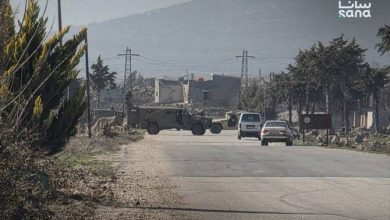
Israeli military operations in southern Lebanon continued on 3 June with strikes targeting what the IDF described as Hezbollah positions. Hezbollah claimed missile launches into northern Israel the same day. The pattern since the April 16 cessation of hostilities has been consistent: announcements of pauses, agreed extensions, and constructive atmospherics at the State Department, with military activity proceeding in parallel and neither side materially constrained by the diplomatic process.
⚠ Paramedics and the Ground Reality
130 Health Workers Dead Since March as Talks Proceed in Washington
While Rubio was speaking to Congress on 3 June, Lebanon’s health ministry was reporting that an Israeli strike on an ambulance in southern Lebanon had killed two paramedics, raising the total number of emergency and health workers killed since the war began in March to at least 130. The figure encompasses doctors, nurses, paramedics, and civil defence workers killed in attacks on healthcare facilities, ambulances, and rescue operations across southern Lebanon and the Bekaa Valley.
The systematic targeting of medical infrastructure has been a documented feature of the conflict since March. An Israeli strike on a health centre in Burj Qalaouiyah in the Bint Jbeil district killed 12 medical workers in a single incident in mid-March. The World Health Organization has recorded hundreds of attacks on emergency medical services in Lebanon during the course of the conflict. Israel has described its strikes as targeting Hezbollah military infrastructure. The Lebanese health ministry and international humanitarian organisations have disputed that characterisation in case after case.
More than 1.2 million people have been displaced inside Lebanon by Israeli strikes and evacuation orders since March, per figures cited by multiple relief agencies. The southern and eastern Bekaa regions of the country have absorbed the heaviest bombardment. Lebanon’s Prime Minister Nawaf Salam has described the Washington talks as the “best opportunity” for Lebanon and its people, and has framed a stable nationwide ceasefire as the principal objective of his delegation. What that delegation can credibly deliver on Hezbollah disarmament, and what Israel will accept as a security guarantee in its absence, is the gap that the fourth round is attempting to close.
🔴 The Delegations and the Structure
Ambassadors at the Table, But the People With Weapons Are Not in the Room
The Israeli delegation is led by Yechiel Leiter, Israel’s ambassador to the United States. The Lebanese delegation is led by Nada Hamadeh Moawad, Lebanon’s ambassador to Washington. On the US side, the principal lead is Deputy National Security Adviser Mike Needham, with State Department Counsellor Daniel Holler also attending. A similar military-level meeting took place at the Pentagon the previous week, per Rubio’s congressional testimony.
The structure of the talks reflects the ceasefire’s own architecture. The April 16 arrangement applies formally between the sovereign states of Israel and Lebanon, not between Israel and Hezbollah. Hezbollah has rejected direct participation in the talks, describing any negotiation as capitulation. It has also rejected calls for disarmament. The Lebanon government’s position is that it is committed to extending state authority and limiting non-state armed actors, but Lebanese officials acknowledge that the timetable and mechanism for doing so in a country where Hezbollah retains deep political and military infrastructure is a matter of years, not weeks.
Israeli officials have pointed out that Hezbollah’s continued fire since the April cessation of hostilities demonstrates that the Lebanese government cannot enforce any security undertakings it makes. Some Israeli officials suggested after the 2 June session that the two sides had found common ground on the desire to see Hezbollah disarmed, and raised the possibility of trade and tourism links as a future state. The distance between that aspiration and operational military reality on the ground in southern Lebanon is the core problem that no round of talks in Washington has yet resolved.
US Secretary of State Marco Rubio : House Foreign Affairs Committee, 3 June 2026
“As I speak to you now, for the second consecutive day, and for the first time in many, many years, the leaders of the legitimate government of Lebanon and leaders from the government of Israel are seated at the State Department for the second day in a row, and hopefully today will produce a joint statement and an action plan on the track for security in that country.”
US Secretary of State Marco Rubio : Senate Foreign Relations Committee, 2 June 2026
“Israel has no territorial claims in Lebanon. Hezbollah is the impediment. There is no Hezbollah without Iran.”
Source Reliability Matrix
NATO grading: REL A (reliable) to F (unreliable). CRED 1 (confirmed) to 6 (cannot judge).
CRED 1
Primary wire for Rubio quote and paramedic deaths. AFP text cross-confirmed by CNN.
CRED 1
Direct-quoted Rubio text from congressional hearing. Used for the primary Rubio statement block.
CRED 1
Government primary source for cumulative death and injury figures. Ministry does not distinguish combatants from civilians in its totals.
CRED 2
Corroborating coverage of talks structure, casualty counts, and Hezbollah battlefield activity. Each outlet carries institutional perspectives; cross-checked against wire reporting.
CRED 2
Background sourcing for the US phased roadmap proposal. Consistent across two independent outlets. Identity withheld.
OSINT HQ Assessment
Washington is producing diplomatic atmospherics while the war in Lebanon continues. The fourth round is the first to carry real expectations of a joint statement, but the structural problem has not changed: the party with the weapons is not at the table.
✓ What We Know
Rubio told the House Foreign Affairs Committee on 3 June that he hoped the session would produce a joint statement and an action plan on security in Lebanon independent from Hezbollah. The fourth round began on 2 June at the State Department with Leiter and Hamadeh Moawad leading their delegations. Trump announced a de-escalation deal on 2 June; both Israel and Hezbollah continued military operations on the same day. Lebanese health ministry figures show 3,468 killed and 10,577 injured as of 2 June, with at least 130 health workers dead since March. Two paramedics were killed in an Israeli strike in southern Lebanon on 3 June.
? What We Do Not Know
Whether a joint statement was agreed by the close of 3 June. The contents of any action plan if one was produced. Whether Iran will follow through on Ghalibaf’s threat to halt nuclear dialogue if Israeli strikes on Lebanon continue. Whether the Lebanese army has any realistic near-term capacity to enforce a Hezbollah disarmament process even if one were agreed in Washington. What Israeli withdrawal terms, if any, Netanyahu is prepared to accept given domestic political pressure to hold ground in the south.
☉ What To Watch
Whether a joint statement is issued and what it covers regarding troop withdrawal timelines. Whether the Lebanese army begins any meaningful southward deployment as a confidence-building measure. Whether Israeli strikes in Beirut’s southern suburbs resume following Netanyahu’s walk-back of the Dahiya threat under US pressure. Whether Iran uses Israeli attacks on Lebanon as a formal pretext to pause nuclear negotiations, and whether Trump disputes that framing as he did on 2 to 3 June. The 45-day extension of the April cessation of hostilities framework runs through late June; its expiry is the next structural deadline.
Sources
- Rubio hopeful for action plan on Israel-Lebanon, AFP via Arab News, 3 June 2026
- Lebanon says Israeli strike on ambulance in south kills two paramedics, Reuters via Arab News, 3 June 2026
- Iran war news live coverage, CNN, 2 to 3 June 2026
- “Hezbollah is the impediment” to Israel-Lebanon peace, says Rubio, Tribune India via ANI, 3 June 2026
- Fourth round of Israel-Lebanon talks begins in Washington under US mediation, Tribune India via ANI, 2 June 2026
- Lebanon hopes crunch talks in Washington will halt an Israeli invasion, Al Jazeera, 2 June 2026
- Washington proposes roadmap for de-escalation in Lebanon, Al Jazeera, 1 June 2026
- Israel kills 8 in attacks on Lebanon after Trump announces de-escalation, Al Jazeera, 2 June 2026
- Israel-Lebanon talks resume, Hezbollah keeps fighting, Jerusalem Post, 3 June 2026
- Israel Keeps Killing Lebanese Civilians Despite Trump’s De-Escalation Claim, Common Dreams citing Lebanese Ministry of Public Health, 2 June 2026
- Rubio testifies on Capitol Hill for the first time since start of Iran war, PBS NewsHour, 2 June 2026
Editorial Verification
The Rubio quote (“hopefully today will… produce a joint statement and an action plan on the track for security in that country”) is verified by two independent primary sources: AFP wire carried by Arab News and CNN live coverage, both dated 3 June 2026. The Rubio Senate testimony quote (“Israel has no territorial claims in Lebanon. Hezbollah is the impediment. There is no Hezbollah without Iran.”) is verified by Tribune India citing ANI, 3 June 2026, consistent with PBS reporting of the 2 June hearing. The cumulative Lebanon death figure of 3,468 killed and 10,577 injured is sourced to the Lebanese Ministry of Public Health statement of 2 June 2026, as reported by Common Dreams. The paramedic figure of 130 health workers killed since March is sourced to the Lebanese health ministry via Reuters, carried by Arab News, 3 June 2026. The Trump Truth Social announcement is sourced to Al Jazeera and The National News. The US phased roadmap proposal (Hezbollah stops attacks, Israel refrains from escalating in Beirut) is sourced to an anonymous US official cited by both Times of Israel and Pakistan Today on 1 June 2026; this is treated as single-source for the identity of the official but cross-confirmed on substance. The April 16 cessation of hostilities and the 45-day May extension are sourced to the US State Department statement carried by Tribune India. The 8 April strikes and death toll are sourced to Reuters and Wikipedia’s documented record. The Lebanon war opening date of 2 March is sourced to Al Jazeera and Times of Israel contemporaneous reporting.
Coordinates and map (v8): No map produced for this article per editor instruction. No MGRS or coordinate cards. Locations referenced are Washington DC (State Department) and southern Lebanon (general area). No precise site coordinates are available or required for this diplomatic and political report.
All claims independently attributed and verified to open sources where possible.
Approved for Publication
Marcus V. Thorne
Lead Editor, OSINT HQ
©osinthq.org 2026
This article is for news and analysis purposes only. Based on publicly available news sources and military updates. All rights reserved. Not for commercial reuse without permission.