Pakistan Strikes Three Afghan Provinces, Killing 11 Children, as Border War Continues

Bottom Line Up Front
Pakistani airstrikes on residential areas in Khost, Kunar and Paktika provinces killed at least 13 people overnight on 9-10 June, including 11 children, with 14 more wounded, according to Taliban chief spokesperson Zabihullah Mujahid and local provincial officials; Islamabad has not acknowledged the strikes.
Key Judgments
The 10 June strikes killed at least 13 people, the great majority of them children, in residential buildings across at least two provinces. AP and AFP both confirmed the Khost and Paktika strikes independently through local officials, with AFP’s Khost source placing nine dead and 10 wounded from a single house in Spera district. The casualty breakdown of 11 children, one woman and one elderly man, as reported by Taliban chief spokesperson Mujahid, is consistent across every major wire.
The timing is a direct response to the 9 June TTP attack on the Hasan Khel security post in Khyber Pakhtunkhwa, which killed six Federal Constabulary personnel. Pakistan has established a consistent pattern since February of striking Afghan territory within 24-48 hours of significant TTP attacks inside Pakistan. The connection is causal, not coincidental.
The Urumqi peace process is effectively dormant. China brokered an agreement in principle that both sides would not escalate; the 10 June strikes on residential buildings in three provinces, following months of similar strikes, indicate Islamabad has concluded that restraint inside Afghanistan costs more domestically than it gains diplomatically. Whether Kabul’s retaliatory cycle resurfaces in the coming days is the near-term watchpoint.
13
Killed, 10 June Strikes
11
Children Among Dead
372
Afghan Civilians Killed, Q1 2026 (UNAMA)
3
Provinces Struck Overnight
SITREP Timeline : Pakistan-Afghanistan Border War, Feb to Jun 2026
The 10 June Strikes
Residential Buildings, Three Provinces, One Night
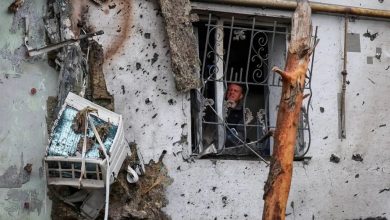
At roughly midnight local time on 9-10 June, the Pakistani Air Force struck residential targets across Khost, Kunar and Paktika provinces in eastern Afghanistan. A Khost provincial official told AFP that a house in the Spera district was hit, killing nine people and wounding ten. Two residents of Paktika told AFP that a separate strike killed three people in the Barmal district of that province; one of them said all those killed were children. Taliban chief spokesperson Zabihullah Mujahid placed the combined toll at 13 dead and 14 wounded.
The breakdown is significant. Eleven of the 13 dead were children. One was a woman. One was an elderly man. Mujahid published the figures on X, stating that Pakistan had bombed civilian homes, and described the strikes as a humanitarian crime. Pakistan’s military, the prime minister’s office and the foreign ministry had all declined to comment at the time of writing, a pattern that has held across multiple rounds of strikes since February.
The Dangam district governor in Kunar, Mohammad Omar Sadiq, told IANS that Pakistani forces had destroyed 12 schools in Kunar province since strikes on that province began, and that 80 head of cattle were killed in the overnight attack. The livestock detail is a ground-level indicator of residential colocation: these were not remote forward positions.
Pakistan’s stated position, applied consistently since February, is that strikes inside Afghanistan are directed at TTP infrastructure and militants who conduct attacks on Pakistani soil. It denies deliberately targeting civilians. No statement was issued for the 10 June strikes by the time of publication.
The Trigger
Hasan Khel and the Retaliation Pattern
On the afternoon of 9 June, TTP fighters overran a Federal Constabulary post at Hasan Khel in Khyber Pakhtunkhwa. Six paramilitary personnel were killed and several others wounded, according to Pakistan’s Interior Ministry. Security forces killed eight of the attackers and held the checkpoint. Interior Minister Mohsin Naqvi flew to Peshawar to attend the funeral prayers and told reporters that operations against groups threatening security would be intensified.
Less than 12 hours later, Pakistani aircraft struck homes across three Afghan provinces.
The sequence has repeated throughout this conflict. Pakistan holds the Afghan Taliban government responsible for TTP activity on the grounds that Kabul shelters and enables the group. Kabul denies this, countering that Pakistan harbours hostile actors of its own and has never respected Afghan sovereignty. Neither position has shifted in months of fighting. The Hasan Khel attack on 9 June fed directly into the cycle.
The UNAMA Record
372 Killed in Three Months. The Worst Since 2011.
On 12 May 2026, UNAMA published its cross-border civilian casualty update for the first quarter of the year. The figures are stark. Between 1 January and 31 March, 372 Afghan civilians were killed and 397 injured as a direct result of cross-border violence between Pakistani military forces and Afghan security forces. UNAMA attributed responsibility to Pakistani security forces in 94 of the 95 documented incidents. The single incident attributed to Afghan forces involved indirect fire. The quarterly figure is the highest the mission has recorded since 2011.
More than half of the quarter’s dead are attributable to one event. On 16 March, Pakistani aircraft struck the Omid Drug Rehabilitation Hospital in Kabul, a facility operating on the grounds of the former NATO base Camp Phoenix. UNAMA independently verified at least 269 killed and 122 wounded. The hospital admitted only male patients; this explains the high proportion of men in the overall Q1 casualty count. Pakistan told UNAMA in writing that the 16 March strikes were directed at alleged drone stockpiles and ammunition depots used by the Taliban, and that no hospital was deliberately targeted. The Taliban put the death toll above 400.
The UNAMA report was published 29 days ago. Since then, the pattern has continued. The 10 June strikes bring further civilian deaths in the same provinces that have been struck repeatedly since February.
The Diplomatic Frame
Urumqi, Beijing and a Dormant Framework
In the months following the February escalation, China hosted peace talks between Pakistan and Afghanistan in Urumqi. Beijing subsequently announced that both sides had agreed not to escalate the conflict and to explore a path toward a durable settlement. Pakistani authorities have since acknowledged that China and unnamed friendly countries remain engaged in encouraging a settlement. No timeline or mechanism for that engagement has been made public.
The operational record since Urumqi has not matched the diplomatic messaging. Pakistani strikes on Afghan territory have continued at intervals. The border, closed to bilateral trade since October 2025, remains shut, stranding thousands of people and severing commerce in both directions. Afghanistan says the Pakistan-Afghanistan border closure was still in effect as of 10 June.
Security analyst Masood Khan, speaking to AP, said Islamabad’s central objective remains enforcing a decree by Taliban supreme leader Mullah Haibatullah Akhundzada that ordered the TTP to stop attacks on Pakistan. Khan said that decree must be implemented sincerely and faithfully for the tension to ease. Kabul’s position is that the TTP is not under its command and that Pakistani strikes on Afghan villages do not constitute a legitimate counter-terrorism operation. The gap between those two positions has not closed since February.
Kabul has previously responded to Pakistani strikes by attacking Pakistani border posts. The situation along the frontier was described as calm in the hours following the 10 June strikes, but that calm has preceded prior retaliatory cycles.
Zabihullah Mujahid, Taliban chief spokesperson, 10 June 2026
“Last night, the Pakistani military once again violated Afghanistan’s airspace and bombed civilian homes in the provinces of Kunar, Khost, and Paktika. As a result of these attacks, 11 children, one woman, and one elderly man were killed, while 14 other women and children were injured. We strongly condemn this humanitarian crime and act of aggression.”
Source Reliability Matrix
NATO grading: REL A (reliable) to F (unreliable). CRED 1 (confirmed) to 6 (cannot judge).
CRED 2
Primary wire. Casualties sourced to Taliban spokesperson statement and Pakistan Interior Ministry statement on TTP attack. Pakistan’s silence on airstrikes noted.
CRED 2
Provides independent provincial-level verification: Khost official (anonymous) confirms nine dead in Spera district; two Paktika residents confirm three dead in Barmal district. Provincial detail cross-checks the Taliban spokesperson’s aggregate.
CRED 2
Interested party with institutional incentive to frame casualties as civilian. Figures consistent with independent provincial sourcing. Casualty breakdown (11 children, one woman, one elderly man) plausible and not contradicted by any other source.
CRED 1
UN mission report verified against three independent sources per UNAMA methodology. Corroborated by Al Jazeera, Arab News, and Kabul Now. The 372 killed figure covers Q1 only and does not include subsequent strikes.
No statement issued on the 10 June strikes at time of writing. Pakistan’s general position, held since February, is that strikes target TTP and allied militant infrastructure and do not deliberately target civilians. That position applies by inference only to this incident.
OSINT HQ Assessment
The Urumqi framework is not holding. Pakistan continues to strike Afghan provinces within hours of TTP attacks on its territory, regardless of any diplomatic agreement. The civilian cost in Afghanistan since February is now documented by the UN at a quarterly rate unseen in 15 years.
✓ What We Know
Pakistani aircraft struck residential buildings in Khost, Kunar and Paktika overnight on 9-10 June. Thirteen people were killed, 11 of them children. The strikes followed a TTP attack that killed six Pakistani paramilitary personnel at Hasan Khel the previous afternoon. UNAMA documented 372 Afghan civilian deaths in Q1 2026 alone, the highest first-quarter toll since 2011, attributing 94 of 95 documented incidents to Pakistani forces. Pakistan has not commented on the 10 June strikes.
? What We Do Not Know
The precise strike geometry inside Kunar province; AFP confirmed Khost and Paktika through separate local sources, but the Kunar figure rests on the Taliban spokesperson’s aggregate. Whether Pakistan conducted airstrikes or drone strikes, or both, on the night of 9-10 June. Whether Kabul will retaliate against Pakistani border positions. Whether the Urumqi framework retains any active diplomatic mechanism, or whether it has effectively lapsed.
☉ What To Watch
Afghan retaliatory action along the Durand Line in the 48-72 hours following the strikes. Pakistan’s Interior Minister Naqvi has explicitly signalled intensified operations; whether that means additional cross-border strikes or internal counter-TTP action is the immediate question. Any Chinese diplomatic communication following the 10 June strikes, given Beijing’s role as the Urumqi framework broker. The cumulative Q2 2026 UNAMA casualty figure, which will not be published until mid-August but which the 10 June strikes will add to.
Sources
- Pakistani Airstrikes in Afghanistan Kill at Least 13 People, Taliban Official Says, Asharq Al-Awsat (AP), 10 June 2026
- Afghanistan Says Pakistan Air Raids Killed 13 People, Including Children, Al Jazeera (AFP), 10 June 2026
- Pakistan Carries Out New Deadly Strikes on Afghanistan, The Daily Star (AFP), 10 June 2026
- Pakistani Airstrikes Kill 13 Civilians, Including 11 Children, in Afghanistan, IANS, 10 June 2026
- Over 370 Afghans Killed in Pakistan Conflict in First 3 Months of 2026, Al Jazeera (UNAMA report), 12 May 2026
- 372 Afghan Civilians Killed, 397 Injured in Taliban-Pakistan Conflict in Three Months, Kabul Now (UNAMA), 12 May 2026
Editorial Verification
The 13 killed figure is verified through AP (carried by Asharq Al-Awsat, ABC News and multiple US affiliates) and AFP (carried by Al Jazeera and The Daily Star) independently. The casualty breakdown of 11 children, one woman and one elderly man is attributed to Taliban chief spokesperson Zabihullah Mujahid’s X post, corroborated across AP, AFP and IANS. The Khost provincial figures (nine killed, ten wounded, Spera district) are sourced to an anonymous AFP provincial official and are independent of the Taliban spokesperson’s aggregate. The three killed in Paktika (Barmal district) are sourced to two AFP local residents; both accounts describe children. No independent verification of the Kunar provincial casualties exists beyond the Taliban spokesperson’s aggregate; this item is flagged as single-source for that province specifically. The TTP attack at Hasan Khel killing six Federal Constabulary personnel is attributed to Pakistan’s Interior Ministry, corroborated by AP, AFP and IANS. The UNAMA 372 killed figure covers Q1 2026 only (1 January to 31 March) and is sourced to the UNAMA cross-border casualty update of 12 May 2026, verified against three independent sources per UNAMA’s own methodology. Pakistan had issued no comment on the 10 June strikes at time of writing; Pakistan’s general denial of deliberate civilian targeting is applied by inference from prior public statements. All claims independently attributed to open sources where possible.
©osinthq.org 2026
This article is for news and analysis purposes only. Based on publicly available news sources and military updates. All rights reserved. Not for commercial reuse without permission.