Iran’s Foreign Minister Claims Joint Hormuz Control With Oman, Defying US Sanctions Warning
Bottom Line Up Front
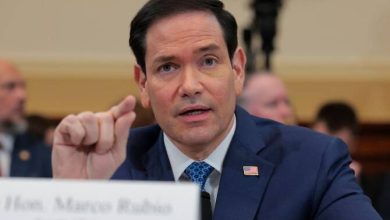
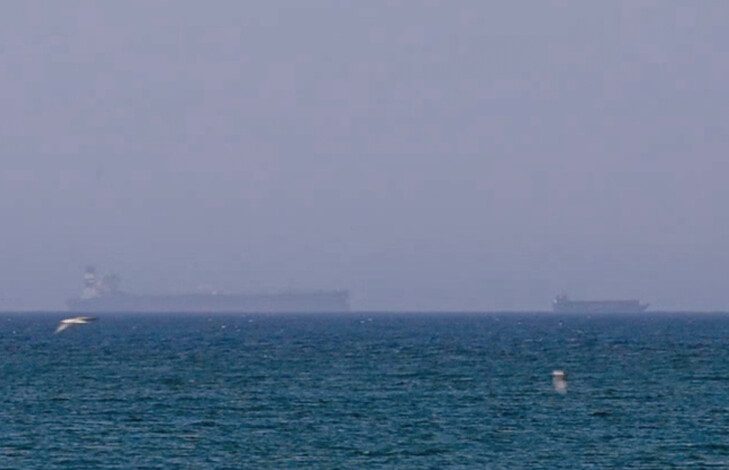
Iranian Foreign Minister Abbas Araghchi said on 5 June that Iran and Oman will jointly manage the Strait of Hormuz under international law, framing the two coastal states as sole decision-makers over the world’s most critical oil chokepoint and directly challenging Washington’s position that no country can control the waterway.
Key Judgments
Araghchi’s joint-management claim is a governance assertion, not a ceasefire deliverable. Tehran has maintained this position consistently since at least 1 April, when Araghchi told Al Jazeera that post-war strait arrangements were a matter for Iran and Oman alone. The 5 June statement deepens that posture; it does not represent a new negotiating concession.
Oman is under acute pressure from both sides simultaneously. Washington threatened sanctions on 28 May; Muscat immediately told Treasury Secretary Scott Bessent it had no plans to participate in tolling. Yet Oman’s deputy foreign minister continued technical talks with Tehran’s legal delegation in Muscat days later. Oman is negotiating navigation principles while publicly distancing itself from any toll architecture.
Tehran’s invocation of international law as the governing framework is tactical. Under UNCLOS Part III, transit passage through international straits is a right that cannot be suspended or made conditional by coastal states; Iran’s simultaneous operation of the Persian Gulf Strait Authority, which requires advance permits for vessels, directly contradicts that framework. Citing international law in the same sentence as exclusive bilateral management is cover, not compliance.
~20%
Global Oil Transit, Pre-War
34km
Narrowest Point, Strait
97 days
Disruption Since 28 Feb
SITREP Timeline : Hormuz Governance Escalation, Feb to June 2026
The Claim
Coastal States, Natural Rights, and a Governance Frame
Araghchi spoke on Thursday via Iran’s state broadcaster IRIB, which cited Lebanon’s Al Mayadeen TV as the source of the interview. The routing matters. IRIB transmitting via Al Mayadeen insulates the statement slightly from direct Iranian state attribution while still placing it squarely within the Iranian foreign minister’s on-record position. His core assertion was unambiguous: Iran and Oman, as the two states bordering the Strait of Hormuz, hold the “natural right” to coordinate and make decisions about the waterway’s management. Gulf countries would be consulted on developments. They would not decide.
This is not a new Iranian position. Araghchi told Al Jazeera on 1 April that post-war governance of the strait was a matter for Tehran and Muscat, describing the waterway as lying within Iranian territorial waters. What has changed between April and June is context, not substance. In April, Washington was still absorbing the ceasefire architecture. By June, the US Treasury has sanctioned Iran’s Persian Gulf Strait Authority, Trump has threatened to destroy Oman, and Bessent has formally warned Muscat against participating in any toll system. Araghchi’s 5 June statement arrives into that environment and repeats the claim anyway.
The framing around international law is the most significant element. Invoking international law while simultaneously operating the PGSA permit regime is contradictory on its face. Under UNCLOS Part III, transit passage through international straits connecting the high seas is continuous and unimpeded; coastal states may regulate lanes and environmental standards but cannot suspend the right itself or require advance authorisation for passage. Iran’s entire permit and fee architecture does precisely what UNCLOS forbids. The legal language in Araghchi’s statement is diplomatic cover directed at international audiences, particularly those in the Global South watching how post-war maritime norms are written.
Oman’s Position
Muscat Faces Two Capitals at Once
Oman is the harder story to read. Muscat told Bessent there were no plans to toll the strait. That assurance came quickly, a same-day call with the Omani ambassador after Bessent’s 28 May post on X. But Oman continued technical navigation talks with Tehran’s legal delegation, led by Deputy Foreign Minister Kazem Gharibabadi, in Muscat in early May. Omani Foreign Minister Badr Albusaidi hosted that meeting personally. The Omani Foreign Ministry’s public readout spoke of restoring freedom of navigation “in a safe and sustainable manner,” language that does not rule out a bilateral framework with Iran covering safety lanes, pilotage, and environmental coordination.
The distinction Oman appears to be drawing is between safety coordination (acceptable to Muscat) and fee-based toll collection (not acceptable, per the Bessent assurance). Tehran has been deliberately blurring that line. Iran’s Khatam al-Anbiya mandatory route directive of 31 May requires vessels to follow pre-designated pathways; whether those pathways come attached to fees is a procedural detail the PGSA controls. Oman’s rejection of tolling does not automatically prevent it from being enrolled in a framework that Tehran can present externally as joint management.
The geopolitical squeeze on Muscat is real. Oman has served as the back-channel mediator between the United States and Iran across multiple administrations; its neutrality is both an asset and a vulnerability in this context. Washington now expects Oman to stand clear of the governance architecture. Tehran expects Oman to share it. Neither will accept Muscat’s preferred option, which is to negotiate navigation safety quietly while avoiding formal co-governance of a toll or permit system.
The Washington Counter
Sanctions, Threats, and a Line That Keeps Shifting
The Trump administration’s response to the governance claim has been high-volume but operationally uneven. Trump threatened to destroy Oman on 27 May. Bessent walked that back the following day, saying the president wanted to “punctuate freedom of navigation” rather than issue a literal military threat. Bessent then formally warned Oman via X and simultaneously sanctioned Iran’s Persian Gulf Strait Authority, targeting the institutional mechanism through which Tehran channels the permit and fee system. That was the substantive move; the Trump statement was noise.
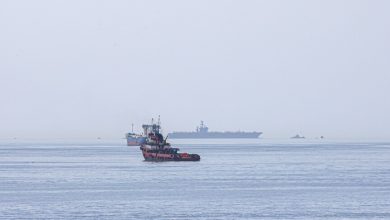
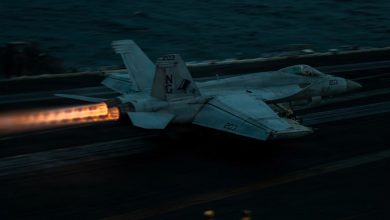
What the sanctions did not do is reopen the strait. Traffic has remained disrupted since 28 February. The IMO Council passed a resolution backed by over 115 states condemning Iran’s actions and calling for freedom of navigation; Iran ignored it. The US naval escort operation protects vessels linked to American interests but does not guarantee transit for the broader commercial fleet. In practical terms, Iran’s de facto control over vessel movements in the strait persists despite the legal and financial pressure.
Araghchi’s remarks on 5 June also include a comment on Supreme Leader Mojtaba Khamenei that deserves separate attention. He said communication with Khamenei remains ongoing and that directives are received and implemented precisely. Read against the backdrop of US-Iran ceasefire negotiations and Trump’s statement that he could meet Khamenei if a deal is reached, this is an assertion that the supreme leader is engaged, functional, and directing policy. It pushes back against any speculation about internal power fragmentation in Tehran during the post-war economic crisis.
The Legal Dimension
International Law as Weapon and Shield
The UNCLOS framework is clear. The Strait of Hormuz, at 34 kilometres at its narrowest and linking the Persian Gulf to the Gulf of Oman, qualifies as an international strait under Part III of the convention. Transit passage is guaranteed; coastal states cannot suspend it, require prior notification, or impose fees. Iran has not ratified UNCLOS in full and disputes aspects of its application to the strait, but the convention is the prevailing international legal standard and the framework invoked by the IMO resolution, the UN Security Council, and 115 states in the IMO vote.
Tehran’s counter-argument runs on sovereignty and coastal-state authority, dressed in the language of safety and environmental protection, which are the two narrow categories where UNCLOS does permit coastal-state regulation. The PGSA permit system and the Khatam al-Anbiya mandatory route directive are both presented as safety measures. The fee component, when Iran raises it, is framed as environmental or administrative cost recovery. This is not legally frivolous; it is a deliberate campaign to occupy the space UNCLOS does allow while building permanent facts on the water.
The question the 5 June statement opens is whether Oman’s signature on any bilateral navigation agreement, however framed around safety principles, gives Tehran the coastal-state partner it needs to argue that joint management is already an established fact when a final peace agreement is eventually negotiated. That is the prize Iran appears to be constructing, one memorandum of understanding at a time.
Scott Bessent, US Secretary of the Treasury, 28 May 2026
“The United States Government will not tolerate any effort to impose a tolling system in the Strait of Hormuz. Oman, in particular, should know that the US Treasury will aggressively target any actors involved, directly or indirectly, in facilitating tolls for the Strait and any willing partners will be penalized.”
Source Reliability Matrix
NATO grading: REL A (reliable) to F (unreliable). CRED 1 (confirmed) to 6 (cannot judge).
CRED 2
Primary wire. Araghchi’s remarks transmitted via IRIB citing Al Mayadeen; not a direct attribution from a press conference or official statement. Graded CRED 2 rather than 1 because the sourcing chain passes through two media intermediaries before reaching AA.
CRED 2
State broadcaster and Iran-aligned regional TV respectively. Both carry editorial alignment with Iranian government positions. The content of Araghchi’s remarks is consistent with his documented statements on other platforms since April; editorial bias does not invalidate the factual claim here but warrants the lower reliability grade.
CRED 1
On-record statement from a named official, corroborated across multiple major outlets. Highest reliability grade.
CRED 2
Reported via Bessent’s White House briefing comments, confirmed by Deccan Chronicle and ANI. Oman has not issued its own on-record public statement; the assurance is attributed to the ambassador through Bessent.
OSINT HQ Assessment
Tehran is constructing governance facts while negotiations run. Araghchi’s 5 June statement is not a diplomatic offer; it is a position being hardened.
✓ What We Know
Araghchi told IRIB via Al Mayadeen on 5 June that Iran and Oman will jointly manage the Strait of Hormuz under international law, with Gulf states consulted but not deciding. This is consistent with his April statements on Al Jazeera. The US Treasury sanctioned Iran’s Persian Gulf Strait Authority on 28 May and warned Oman against participating in any toll system. Oman’s ambassador assured Bessent there were no plans to toll the strait. Iran’s Khatam al-Anbiya issued mandatory route designations on 31 May. The IMO Council resolution backed by 115 states calls on Iran to stop disrupting navigation.
? What We Do Not Know
Whether any memorandum of understanding between Iran and Oman on navigation principles has been signed or initialled. The precise language of the draft protocol being discussed in Muscat, and whether it includes fee or permit elements. Whether Oman’s public denial of tolling extends to a full rejection of the joint management framework or only to the fee collection component. Whether ongoing US-Iran negotiations have reached any agreement on the status of the PGSA and the permit regime. The timeline for any final Hormuz governance arrangement as part of a comprehensive war-ending deal.
☉ What To Watch
Whether Oman issues its own public statement on the joint management claim, and whether that statement endorses, qualifies, or rejects Araghchi’s framing. Whether the Iran-US ceasefire or peace negotiations produce any language on Hormuz governance, and how PGSA operations are addressed. Whether the IMO Council resolution produces any enforcement mechanism or remains declaratory. Whether Trump’s suggestion of a possible meeting with Supreme Leader Khamenei advances; the Araghchi statement on Khamenei’s active direction of policy appears to signal that such a meeting is not structurally blocked from the Iranian side.
Sources
- Iran says Strait of Hormuz to be managed jointly with Oman under international law, Anadolu Agency, 5 June 2026
- Iran, Oman to jointly manage Strait of Hormuz, FM Araghchi says, Turkiye Today, 5 June 2026
- Iran’s Araghchi says decisions on Hormuz Strait would be made jointly with Oman, Middle East Eye, 5 June 2026
- US Treasury threatens Oman with sanctions over Hormuz Strait, Al Jazeera, 28 May 2026
- Iran war: US threatens sanctions and military action against Oman, CNBC, 29 May 2026
- US Treasury Warns Oman Over Hormuz Toll System, gCaptain, 28 May 2026
- Oman Says Strait of Hormuz Tolling Not Under Consideration Following US Warning, Deccan Chronicle, 29 May 2026
- Oman and Iran agree on Hormuz navigation principles as US deal nears, Turkiye Today, May 2026
- Iran Imposes New Navigation Restrictions in Strait of Hormuz, Voice of Emirates, 31 May 2026
- A Deal That Allows Iran Any Control of the Strait of Hormuz Is a Terrible Idea, US Naval Institute Proceedings, April 2026
Editorial Verification
Araghchi’s 5 June statement is verified through Anadolu Agency and independently corroborated by Turkiye Today, Middle East Eye, and Borneo Post. The sourcing chain (IRIB via Al Mayadeen) is flagged in the Source Reliability Matrix; the substance of the remarks is consistent with Araghchi’s documented positions on Al Jazeera (1 April) and Seeking Alpha / Tasnim (1 April). Bessent’s 28 May sanctions warning and Oman toll denial are verified across Al Jazeera, CNBC, gCaptain, and Antiwar; the Oman denial is attributed through Bessent’s White House briefing, with Oman having issued no independent public statement at time of writing. The Khatam al-Anbiya mandatory route directive of 31 May is single-sourced to Voice of Emirates; additional confirmation was not located at time of publication. The UNCLOS Part III analysis is based on the convention text and the USNI Proceedings April 2026 piece. All claims attributed to open sources where possible.
©osinthq.org 2026
This article is for news and analysis purposes only. Based on publicly available news sources and military updates. All rights reserved. Not for commercial reuse without permission.