Rutte Meets Trump in Washington as US Threatens NATO Exit Over Iran Stance
Executive Summary
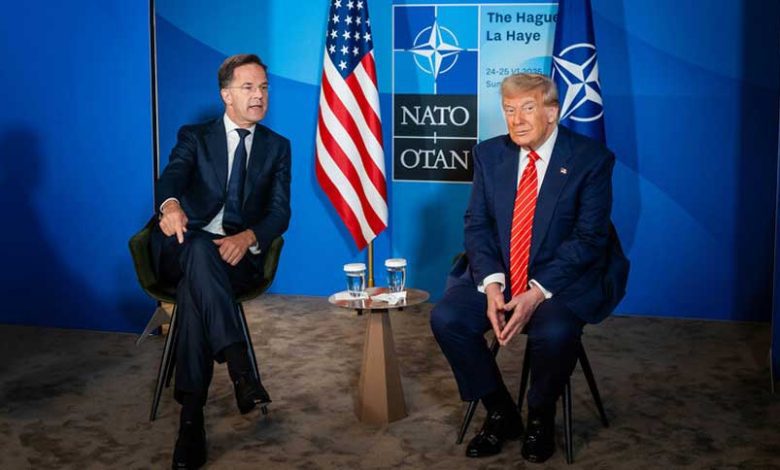
NATO Secretary General Mark Rutte is meeting US President Donald Trump in Washington amid escalating threats from the US administration to reconsider or even withdraw from NATO. Trump has cited European allies' refusal to support US actions against Iran and what he calls unfair burden-sharing as key reasons for his frustration. The meeting comes at a critical moment for the 75-year-old alliance, raising questions about its future if the United States were to step back or leave entirely.
0
FORMAL WITHDRAWAL NOTIFIED
1
HIGH-LEVEL MEETING
75
YEARS OF NATO ALLIANCE
🔴 Section One
Claim Analysis — Fact-Check Verdict
President Trump has repeatedly threatened to pull the United States out of NATO or drastically reduce its commitment, citing European allies' lack of support for US actions in the Iran conflict and what he describes as unfair burden-sharing. NATO Secretary General Mark Rutte is in Washington for a three-day visit that includes direct talks with Trump in an effort to stabilize the alliance.
SOURCE: PRESIDENT DONALD TRUMP
"The US may leave NATO or reassess its commitment due to allies' lack of support on Iran and unfair burden-sharing."
Trump has made the threat publicly and privately, linking it to European refusal to back US strikes on Iran and ongoing complaints about defense spending. No formal Article 13 withdrawal notice has been submitted, and any actual exit would require significant legal and political processes in Washington. Rutte's visit is widely viewed as an urgent attempt to prevent escalation of the rift.
🔵 Section Two
Strategic Assessment: Consequences if the US Leaves NATO
A US withdrawal from NATO would be one of the most significant blows to European security since the end of the Cold War. The United States currently provides the overwhelming majority of the alliance’s high-end capabilities — strategic airlift, intelligence, surveillance and reconnaissance, aerial refueling, advanced missile defense, and the nuclear umbrella that underpins Article 5. Without the US, European members would face immediate and massive capability gaps. Replacing American contributions in air and naval power, long-range strike, and command structures would require hundreds of billions of euros in additional spending over many years. Eastern flank countries, in particular, would feel acutely exposed, as US forward-deployed forces and rapid reinforcement capabilities are central to current deterrence against Russia. Politically, the alliance could fracture into smaller bilateral arrangements or ad-hoc coalitions, weakening its collective strength and credibility. The loss of the US nuclear guarantee would force difficult debates in Europe about independent nuclear deterrence or greater reliance on France and the UK. Many smaller allies currently depend heavily on American presence; a US exit could trigger a rapid rearmament race or, conversely, increased vulnerability that adversaries might exploit. Economically, the burden shift would strain already stretched budgets, especially as Europe deals with energy costs and post-conflict recovery. Long-term, a diminished or absent US role would push Europe toward greater strategic autonomy, but achieving the necessary industrial base, political unity, and military integration would take decades and carry high risks in the interim. Rutte’s meeting with Trump is a critical diplomatic effort to prevent this scenario, but the underlying grievances over burden-sharing and alliance solidarity remain unresolved. Any significant US pullback would mark a historic turning point, forcing Europe to defend itself more independently in an increasingly volatile world. For related coverage on regional tensions, see our previous briefing on the Balkan Stream pipeline incident: TurkStream Pipeline Sabotage Serbia: Serbia Denies Ukrainian Involvement.
OSINT HQ — Related Coverage
Sources
- • Euronews — Rutte Meets Trump Amid US Threat to Leave NATO
- • Reuters — Trump Threats and NATO Tensions
- • RFE/RL — Broader Alliance Dynamics
©OSINTHQ.org 2026
This article is for news and analysis purposes only. It is based on publicly available news sources and military updates. All rights reserved. Original reporting may come from various open sources. Not for commercial reuse without permission.