
Ukraine Gets Tenth German IRIS-T Launcher as Zelenskyy Warns of Critical Missile Shortage
Threat Level Assessment
LEVEL 4 OF 5, SERIOUS
Bottom Line Up Front
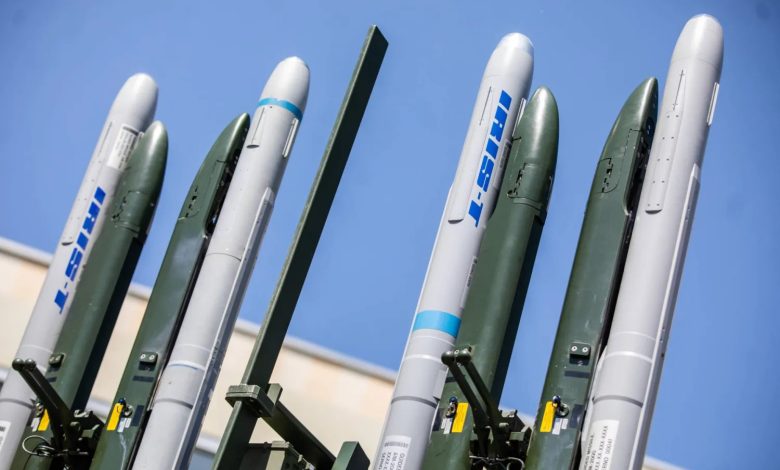
Ukraine received a new IRIS-T air defence launcher from Germany on 30 May, President Volodymyr Zelenskyy announced via Telegram on 31 May, bringing the estimated total of German-supplied IRIS-T systems to ten of an 18-unit commitment. On the same night, Ukrainian forces struck the Saratov oil refinery deep inside Russia and the Lazarevo oil pumping station in the Kirov region. The delivery and the deep strike occurred against the backdrop of a declared critical shortage of interceptor missiles, with Zelenskyy having sent an urgent letter to President Trump and Congress on 26 May requesting Patriot PAC-3 missiles and warning that the PURL programme is failing to match the pace of the Russian threat. Germany remains Ukraine’s largest European military donor, having committed 11.5 billion euros in support for 2026.
Key Judgments
The IRIS-T delivery is the tenth of 18 systems Germany has contracted to supply Ukraine. Germany’s Ambassador to Ukraine confirmed nine systems had been delivered and more were imminent in a January 2026 Suspilne interview, and the Ukrainian Ministry of Defence confirmed nine as of December 2025. The 30 May delivery advances the programme by one unit and preserves Berlin’s standing as Ukraine’s principal air defence partner.
Ukraine is facing a structural interceptor missile shortage that new launchers alone cannot resolve. The IRIS-T SLM system performs well against cruise missiles, drones, and aircraft, but carries no anti-ballistic missile capability. Zelenskyy’s 26 May letter to Trump requesting Patriot PAC-3 missiles identified ballistic missile defence as the single most critical gap. The simultaneous arrival of a German launcher and a presidential plea to Washington for American-made interceptors illustrates the two-tier structure of the problem.
The overnight Saratov refinery strike on 30 to 31 May, occurring simultaneously with the IRIS-T announcement, reflects a deliberate Ukrainian signalling posture: even as it solicits additional defensive hardware, Kyiv is demonstrating sustained deep-strike capacity. The Saratov refinery is a Rosneft asset with a 7-million-ton annual processing capacity and is directly implicated in Russian military fuel logistics. The Lazarevo pumping station in Kirov Oblast, struck the same night, sits on the Surgut-Polotsk pipeline connecting Siberian oil fields to Baltic export terminals. Both targets serve the same interdiction logic.
Whether the PURL programme shortfall is primarily a funding constraint, a production bottleneck at US defence contractors, or a political decision within the Trump administration to maintain leverage in the broader US-Ukraine relationship. All three explanations are circulating in open-source reporting; none has been confirmed by a named official source on record.
10
IRIS-T Systems Now Delivered
18
Total IRIS-T SLM Ordered, Germany
2,300+
Russian Attack Drones, Past Week
€11.5bn
German Military Aid, 2026
SITREP Timeline : Germany IRIS-T Deliveries and Ukraine Air Defence, 2022 to May 2026
🔵 The Delivery
A Tenth Launcher, Publicly Announced, Against a Backdrop of a Declared Shortage
The new IRIS-T launcher arrived in Ukraine on 30 May 2026 and was publicly confirmed by President Zelenskyy via Telegram on 31 May. The delivery advances Germany’s fulfilment of an 18-unit IRIS-T SLM contract with Diehl Defence, a commitment established in the years following Russia’s full-scale invasion and progressively delivered through a series of annual tranches. Zelenskyy thanked Berlin directly: the statement, as reported by UNITED24 Media, acknowledged that thousands of lives had been saved by the German systems already in service. The gratitude was genuine and pointed at the same time. It came four days after Zelenskyy dispatched an urgent letter to Washington warning that the PURL programme, the mechanism through which NATO allies finance US-made weapon purchases for Ukraine, was no longer keeping pace with the threat.
The IRIS-T SLM is a medium-range surface-to-air missile system with an engagement envelope of up to 40 kilometres in range and 20 kilometres in altitude. It is designed to intercept cruise missiles, aircraft, helicopters, and unmanned aerial vehicles. Ukraine’s air defence community values it for its ability to handle the Shahed one-way attack drone threat and Russian cruise missile variants, which make up the bulk of Russia’s daily strike load. The system integrates into Ukraine’s broader layered defence architecture and can operate in coordination with Patriot and legacy Soviet-origin platforms. What it cannot do is intercept ballistic missiles, which is precisely the category Zelenskyy flagged in his letter to Trump as the existential gap.
The structural challenge for Ukraine’s air defence posture is not the absence of launchers. With ten IRIS-T systems now in service alongside two German-supplied Patriot batteries and multiple legacy S-300 and Buk installations, Ukraine possesses a denser and more capable coverage network than it held at any earlier point in the war. The problem is interceptor missile consumption, measured against a weekly Russian aerial salvo of more than 2,300 attack drones, approximately 1,560 guided aerial bombs, and 108 missiles across multiple classes, per Zelenskyy’s own published figures for the week ending 31 May. The mathematics of attrition eventually favours the side producing missiles faster than they are used.
🟡 The Letter to Washington
Zelenskyy’s Five-Page Case for Patriot PAC-3 Missiles, and What It Reveals About the PURL Programme
The letter Zelenskyy sent to Trump on 26 May 2026, a five-page document confirmed by Zelenskyy’s communications adviser Dmytro Lytvyn and reported by the Kyiv Independent, represented an escalation in the urgency of Ukraine’s public diplomatic posture toward Washington. A parallel copy was delivered by Ukrainian Ambassador Olga Stefanishina to Congress. The letter made two connected arguments: that Ukraine’s ballistic missile defence relies almost entirely on the United States, and that the current pace of Patriot PAC-3 missile deliveries through the PURL mechanism is no longer adequate given the scale of Russia’s bombardment. Ukraine’s request was for more interceptors, not new system platforms.
The PURL programme, the Prioritised Ukraine Requirements List, was established as a mechanism to allow NATO and partner nations to finance the procurement of US-origin weapons for Ukrainian use, sidestepping the political and bureaucratic friction of direct US government transfers. In concept it was designed to be faster than traditional foreign military sales. In practice, according to Zelenskyy’s letter, delivery timelines have slipped relative to operational need. A senior Ukrainian official described the ballistic missile intercept shortfall as “really tough” in background comments to the Kyiv Independent on 27 May. Whether the shortfall is a production queue problem at American defence contractors, a budgetary issue at the participating PURL nations, or a deliberate calibration by the Trump administration is not confirmed in open-source reporting.
The strategic function of the letter was also signalling. Kyiv had received public threats from Moscow of a new wave of long-range ballistic missile strikes targeting what Russian officials described as Ukraine’s decision-making centres, a formulation that has historically preceded heavy strikes on Kyiv. The letter, and the subsequent public confirmation of its existence, placed on record before any such strike that Ukraine had formally warned Washington of its defensive inadequacy. That framing creates political accountability in advance, rather than in the aftermath.
President Volodymyr Zelenskyy : Telegram Statement, 31 May 2026
“Yesterday we received a new IRIS-T launcher. Thank you, Germany, for your constant contribution to protecting people. Thousands and thousands of lives have been saved thanks to such strong support.”
🔴 The Saratov Strike
Ukrainian Drones Hit a Rosneft Refinery 600 Kilometres Inside Russia and a Pipeline Hub in Kirov
On the night of 30 to 31 May 2026, Ukrainian forces struck the Saratov oil refinery in the Volga River region of southwestern Russia. The Ukrainian General Staff confirmed the strike and stated that a large-scale fire broke out across the refinery’s territory. The facility operates as a subsidiary of state-owned energy company Rosneft and carries a designated processing capacity of approximately 7 million tons of crude oil per year, producing gasoline, diesel fuel, and other petroleum products used in part to support Russian military logistics. Saratov is approximately 600 kilometres from the Ukrainian front line, placing the strike well into Ukrainian long-range drone range but outside the reach of shorter-range artillery-delivered munitions.
The same night, Ukraine’s Special Operations Forces struck the Lazarevo linear production and dispatch station in Russia’s Kirov Oblast, approximately 1,200 kilometres from the Ukrainian border. The SOF statement described Lazarevo as a key node of the Surgut-Polotsk main oil pipeline, which carries Siberian crude to Baltic export ports and is also connected to the Druzhba pipeline system, allowing Russia to redistribute flows between the largest pipeline networks in the European part of the country. A separate strike hit an oil depot in Matveyev Kurgan in the Rostov region, near the Ukrainian border. The Kyiv Post and Kyiv Independent both confirmed the Saratov refinery strike; Al Jazeera and the AP reported the strikes based on Ukrainian military statements. Extent of damage was still being assessed at time of writing.
Ukraine has increased its operational tempo against Russian energy infrastructure since mid-2025, arguing publicly that the Russian energy sector both finances and directly fuels the military campaign. The Saratov refinery had been struck previously on multiple occasions. The sequencing of the overnight strikes with the IRIS-T announcement on 31 May created a dual-track public message: Kyiv is receiving Western defensive hardware, and Kyiv is simultaneously capable of reaching targets hundreds of kilometres inside Russia. Neither message is incidental.
🟢 Germany’s IRIS-T Programme
Eighteen Systems Ordered, Ten Delivered: The Architecture of Germany’s Air Defence Commitment
Germany contracted Diehl Defence for 18 IRIS-T systems for Ukraine, a commitment built progressively from a single-system debut delivery in September 2022 through successive annual tranches. Each system as delivered comprises three IRIS-T SLM medium-range launchers and two IRIS-T SLS short-range launchers as a unified complex, which has at various points created accounting confusion: headline counts of individual launchers can exceed the headline count of “systems.” Defence Express’s January 2026 analysis explicitly addressed this ambiguity, confirming nine complete systems at that point and noting German Ambassador Thoms’s confirmation of the same figure.
With the 30 May delivery, Ukraine has received the tenth of 18 contracted systems, placing Germany halfway through its commitment. Eight systems remain. Production at Diehl Defence is ongoing and the delivery schedule has broadly tracked the pace Germany outlined: four systems in 2025 were delivered, consistent with the plan confirmed by the German government, though an earlier Defence Express report noted that at least one 2025 delivery had briefly slipped to 2026 before being corrected. The programme runs through approximately 2027 on current projections, reflecting both the industrial lead time for the SLM variant and the sequencing of crew training in Germany before each system is handed over.
Germany’s IRIS-T commitment sits within a significantly larger 2026 military aid package. Chancellor Merz, announcing the figure at the Coalition of the Willing meeting in Kyiv on 24 February, stated the German government had raised planned military support to 11.5 billion euros for the year, the highest level since the conflict began, and up substantially from prior years. The package covers not only IRIS-T deliveries but artillery systems, armoured vehicles, drones, and financing for US-origin Patriot systems purchased on Ukraine’s behalf. Berlin has become Ukraine’s largest European military donor, with cumulative aid estimated at over 40 billion euros since February 2022, placing it second globally after the United States.
⚠ The Missile Consumption Problem
New Launchers Without Interceptors Are Buildings Without Windows: Capable in Structure, Incomplete in Function
The strategic paradox embedded in the 31 May news cycle is precise: Ukraine announced the receipt of a new air defence launcher at the same moment it was publicly warning that its stock of missiles to load into existing launchers is critically short. IRIS-T SLM missiles and Patriot PAC-3 interceptors are not interchangeable; they serve different engagement envelopes and different threat categories. The IRIS-T fires against aerodynamic threats at medium range. The Patriot PAC-3 engages ballistic missiles at higher altitudes and longer ranges. Ukraine has both launcher types and is running low on both missile types at different rates, but the deficit on PAC-3 interceptors is the one Zelenskyy characterised as existential in his letter to Trump.
Zelenskyy’s published figures for the week of the announcement provided the operational context: more than 2,300 Russian attack drones, around 1,560 guided aerial bombs, and 108 missiles of various types, directed at civilian infrastructure including residential buildings and energy facilities. Ukraine’s air defence neutralised 212 of 229 drones in the overnight session of 30 to 31 May according to Russian claims; Ukrainian figures typically run at different intercept rates for different threat categories. The guided aerial bomb figure, 1,560 in a single week, represents the category Ukraine’s interceptors struggle most with, as these weapons are released inside Russian airspace by aircraft Ukraine cannot reach without longer-range strike assets.
Ukraine’s domestic alternative is in early development. Defence company Firepoint has announced participation in the international Freya project, a lower-cost alternative to the Patriot designed to intercept ballistic missiles, with initial testing anticipated before the end of 2026. The timeline is aspirational; no production or delivery date has been committed. A Ukrainian analogue of the Patriot, even if successful in testing, would not enter service in time to address the shortfall Zelenskyy flagged in the May letter. The near-term answer, if it arrives, will come from Washington.
Source Reliability Matrix
NATO grading: REL A (reliable) to F (unreliable). CRED 1 (confirmed) to 6 (cannot judge).
CRED 1
Verified primary source. Zelenskyy’s official Telegram account (ZelenskyyUa). Carried by Asharq Al Awsat, UNITED24 Media, Al Jazeera, and Reuters.
CRED 1
Primary military source on Saratov and Lazarevo strikes. Confirmed by UNN, New Voice of Ukraine, AP, and Al Jazeera. Damage assessment still ongoing at time of writing.
CRED 1
Exclusive reporting on the letter, confirmed independently by Zelenskyy’s communications adviser Dmytro Lytvyn and corroborated by Ukrainska Pravda and the Office of the President of Ukraine.
CRED 1
Nine-system figure sourced from Ukrainian Defence Minister Shmyhal statement (MoD website) and German Ambassador Thoms interview with Suspilne. Both are primary government sources. Defence Express analysis January 2026 confirmed and contextualised the figure.
CRED 2
Ukrainian government-affiliated outlet, editorially independent per its own stated standards. CRED 2 rather than CRED 1 given institutional proximity to Ukrainian government communications.
OSINT HQ Assessment
Germany is delivering on its launcher commitment. The critical variable is now American interceptor missiles, not German hardware, and the answer to Zelenskyy’s May letter has not yet arrived.
✓ What We Know
Ukraine received its tenth IRIS-T system from Germany on 30 May 2026, confirmed by Zelenskyy’s own Telegram statement. Eight systems remain under the 18-unit Diehl Defence contract. Germany has committed 11.5 billion euros in military support for 2026. Zelenskyy sent a five-page letter to Trump and Congress on 26 May identifying a critical shortage of Patriot PAC-3 anti-ballistic missile interceptors as the primary gap, with the PURL programme delivery pace falling short. Ukrainian forces struck the Saratov oil refinery and Lazarevo pipeline station on the same night as the IRIS-T delivery, with both strikes confirmed by the Ukrainian General Staff. Russia launched over 2,300 drones, approximately 1,560 guided aerial bombs, and 108 missiles against Ukraine in the week prior to this report.
? What We Do Not Know
Whether the Trump administration has formally responded to Zelenskyy’s 26 May letter and what, if any, accelerated PAC-3 deliveries are in progress. Whether the PURL shortfall is a production bottleneck, a funding gap, or a deliberate policy posture. The full extent of damage at the Saratov refinery and Lazarevo station, which remains under assessment. The specific delivery schedule for the remaining eight IRIS-T systems under the German contract and whether 2026 tranches will match or exceed the four-unit 2025 pace.
☉ What To Watch
Whether the US responds to Zelenskyy’s letter with any announcement on PAC-3 delivery acceleration. Whether Russia follows through on its publicised threats of a new wave of long-range strikes on Kyiv’s decision-making centres and, if so, what Ukraine’s intercept rate reveals about current magazine depth. Whether Ukraine’s Firepoint-Freya programme advances toward a first live intercept test before the year’s end. Whether Germany announces further IRIS-T deliveries in 2026 ahead of schedule. Whether the Saratov refinery damage materially affects Russian fuel logistics for the southern front.
Sources
- Ukraine Says it Received New IRIS-T Launcher from Germany, Asharq Al Awsat, 31 May 2026
- Germany Sends New IRIS-T Air Defense Launcher to Ukraine as Missile Stocks Run Low, UNITED24 Media, 31 May 2026
- Exclusive: Zelensky Sends Trump Urgent Letter Warning of Critical Missile Defense Shortages, Kyiv Independent, 27 May 2026
- Defense Forces Struck the Saratov Oil Refinery and Military Facilities in the RF, Ukrainian General Staff via UNN, 31 May 2026
- SOF Drones Hit a Key Node of the Surgut-Polotsk Oil Pipeline, Ukrainian Special Operations Forces via UNN, 31 May 2026
- Ukrainian Drone Attacks Hit Multiple Russian Targets Including Refinery, Al Jazeera, 31 May 2026
- Russia’s Saratov Oil Refinery Reportedly Struck by Ukrainian Drones, Kyiv Independent, 31 May 2026
- Why Counting Ukraine’s IRIS-T Systems Is Not as Simple as It Seems, Defence Express, January 2026
- Germany Delivers Ninth IRIS-T Air Defense System to Ukraine, Defence Express, 26 December 2025
- Germany Increased Military Aid to Ukraine to 11.5 Billion Euros in 2026, UNN via Merz statement, February 2026
Editorial Verification
The IRIS-T delivery on 30 May is verified via Zelenskyy’s primary Telegram statement (ZelenskyyUa account) and confirmed by Asharq Al Awsat, UNITED24 Media, and Al Jazeera. Zelenskyy’s 26 May letter to Trump and Congress is verified through the Kyiv Independent exclusive, confirmed by Zelenskyy’s communications adviser Dmytro Lytvyn and corroborated by the Office of the President of Ukraine statement, Ukrainska Pravda, and multiple secondary outlets. The total of ten systems delivered is derived from: Ukrainian MoD confirmation of nine systems (December 2025), German Ambassador Thoms confirmation of nine systems with more forthcoming (Suspilne, January 2026), and the addition of the 30 May delivery. The 18-system contract total is confirmed by Diehl Defence, Ukrainian Ambassador Makeiev (European Pravda, July 2025), and Defence Express. The Saratov refinery and Lazarevo strikes are confirmed by the Ukrainian General Staff, the Special Operations Forces, the Kyiv Post, Kyiv Independent, AP, Al Jazeera, and New Voice of Ukraine. The damage assessment remains ongoing; no third-party independent verification of physical damage is available at time of writing. German 11.5 billion euro 2026 aid figure verified via Chancellor Merz public statement (Kyiv, 24 February 2026) and Reuters, Politico, and UNN reporting. The Zelenskyy weekly aerial attack figures (2,300 drones, 1,560 guided bombs, 108 missiles) are sourced to Zelenskyy’s own Telegram statement as reported by UNITED24 Media; these are Ukrainian government figures and have not been independently verified by third-party sources. Russian air defence intercept claim for overnight 30 to 31 May (212 of 229 drones) is a Russian assertion and is presented as such.
Coordinates and map (v8): No map produced for this article. This is an equipment delivery and strategic analysis report with no specific site coordinates required. Geographic references are at national or regional level only and require no MGRS notation.
All claims independently attributed and verified to open sources where possible.
Approved for Publication
Marcus V. Thorne
Lead Editor, OSINT HQ
©osinthq.org 2026
This article is for news and analysis purposes only. Based on publicly available news sources and military updates. All rights reserved. Not for commercial reuse without permission.